

This question comes to me at least a few times a year, and it’s a very valid question. I have nothing against anyone who shows in AKC (the American Kennel Club) and I’m genuinely happy to congratulate friends and acquaintances on their wins. Even more, I’m supportive of everyone who goes out and has fun with their dog in any venue, win or lose. That’s what dog sports are all about, whether through conformation (how a dog looks), companion events (like Canine Good Citizen), instinct events (like coursing) or trained sports (like agility) – it’s all about having fun with your dog. Conformation is what nearly everyone is referring to when they ask if a breeder ‘shows’; that’s where Championship titles are earned, and it’s a primary method of proving a dog as breeding quality.
What is ‘Conformation’?
Conformation is what most people think of when they hear ‘dog show’ – it’s the main focus shown on TV for events such as Westminster and the Eukanuba Classic. The purpose is to evaluate and prove dogs to be worthy of breeding. Dogs trot around a ring with their handler and stand while the judge examines them; they compete against others in their breed to determine the Best of Breed, then compete within their Group (Toy, Sporting, Terrier, etc), then the winners move on to Best in Show.

What are the dogs being judged against? Each breed has a written Breed Standard, describing what the perfect specimen of that breed looks like – how tall they are, what shape their head is, how they carry their ears, the length of their body, their acceptable coloration, their temperament and demeanor, etc. The Standard also describes faults and disqualifications – perhaps a breed is preferred to have dark brown eyes, while light brown eyes are a fault and blue eyes are a disqualification. No dog – no being – is “perfect”, so the judge is evaluating each entered dog for how closely they compare to their written Standard, and then ranking the dogs based on their assessments. The dog who in their eyes is the closest to the ideal representation of their breed, is the winner. As they move up to compete with other breeds, rather than being compared to each other the dogs are still being judged to their own Breed Standard – whoever comes the closest to what *their* breed should be, is placed higher than a dog who is slightly further from their own Standard.
Each judge brings their own personal emphasis to their judging – some really care about a proper head and would rather accept a slight deviation somewhere else than to pick an otherwise beautiful dog who has a weak underjaw, for example. These slight differences in what each judge values most, combined with the fact that each show will have different dogs entered and different judges assigned, mean that placements will vary a lot and just because one judge does (or doesn’t) like a particular dog on a given day doesn’t really mean much in the long run – a show career will have good days and bad, wins and losses. Every show is a new day with new opportunity, and (at least in Poodles) nearly any generally decent dog can finish their championship if shown enough times and groomed/presented well.
Breed Type and Fads
‘Type’ is what makes each breed unique, what makes them recognizable as that breed and no other. It’s how they conform to their Breed Standard – and then some. Some breeds have multiple ‘types’, generally a show/conformation type and a working type (herding, hunting, guarding, etc). Ideally there isn’t a break in type, and a dog that represents their Standard well should also be very capable of the work the breed was originally bred to perform… but in many breeds there become ‘fads’, where a dog who has a particularly “flashy” fault is highly awarded, bred a lot, and others lean towards producing dogs with the same fault hoping for the same high awards. Over the years that flashy high-stepping gait, or over-extended rear legs, or excessively flat face can become entwined with the breed’s Type even if the Standard does not call for it, and it can get harder for dogs who conform closer to the moderation often detailed in the written Standard to win against the dogs with the fad Type.
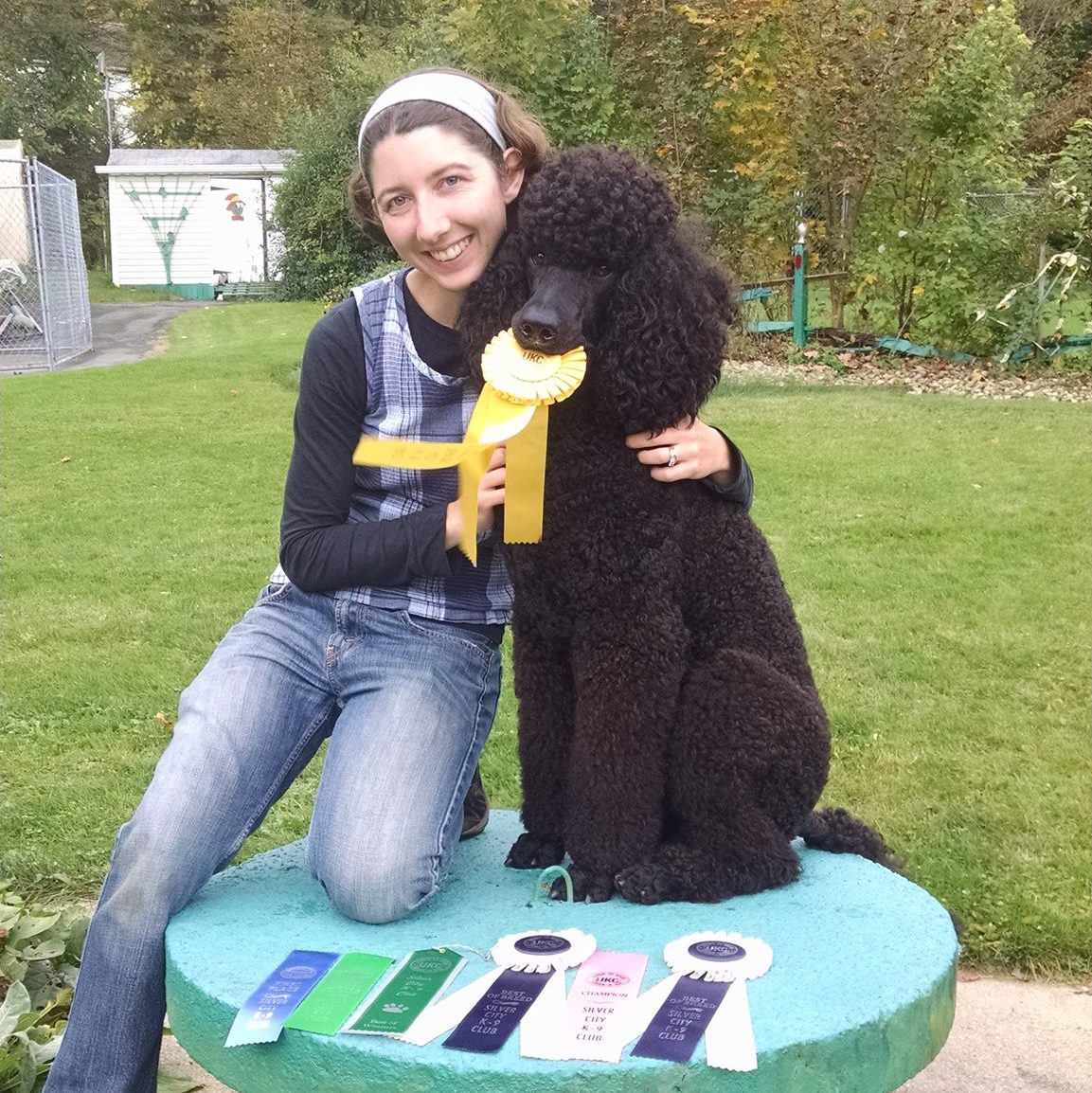
… Politics…
This is an unfortunate reality, and it continues because it’s how so many aspects of life work. A judge gets hired for assignments based on how many entries they tend to draw. Breeders and owner-handlers generally focus on 1-2 dogs at a time and pick and choose which shows to enter. When a judge awards a dog from this category, it doesn’t have much impact on how many future entries that exhibitor will bring to the judge. On the other hand, professional handlers will enter a larger number of dogs, enter shows most weekends, and are willing and able to travel farther if there is a particular judge under whom they think their dogs will do well; when a judge awards a dog entered by a pro, the pro is likely to bring more future entries to that judge, and the judge will get more assignments.
It is important to note that often the dogs exhibited by professional handlers are very deserving of these wins – pros are taking on clients who are good quality dogs, they are grooming the dogs to perfection, they spend time training the dogs to show well and they are of course experts at showing their client dogs off to emphasize their best features. That said, if an owner who rarely shows is presenting their dog just as well, there can be a natural sway for the judge to pick the dog with the handler they recognize and see often.
Where do I put my Focus?
I breed with a strong focus on the written Breed Standard, but I lean away from the aspects of Breed Type that are fads – caricatures – of what the Standard describes. It saddens me that many Poodles in the show ring are often rewarded even with serious structural flaws including straight upper arms, forward forequarters (the elbow should be below the withers, not under the ear or chin as is often rewarded in the ring!), ewe necks, and over-extended rear angulation (the rear feet should land just behind the ‘point of rump’, not 3″+ behind the dog)… the big hair can trick the eye a bit but when shaved down a lot of AKC champions are actually quite unsound and in my opinion are structurally ugly. I focus on what is actually written in the breed standard, rather than looking for whatever is the current fad in the ring.
Some of my lines certainly stray from the Standard more than I like… some are heavier-boned, many have straighter rear angulation than ideal, since I keep natural tails I certainly see a lot of gay and curled tails, etc… but based on their unique genetic diversity, temperament and health I feel certain dogs are still worth breeding – and I select a mate that will help balance the pups closer to the Standard. I then select my keeper pup to move closer towards the Standard in addition to saving the other characteristics that I appreciate about that parent in the first place.
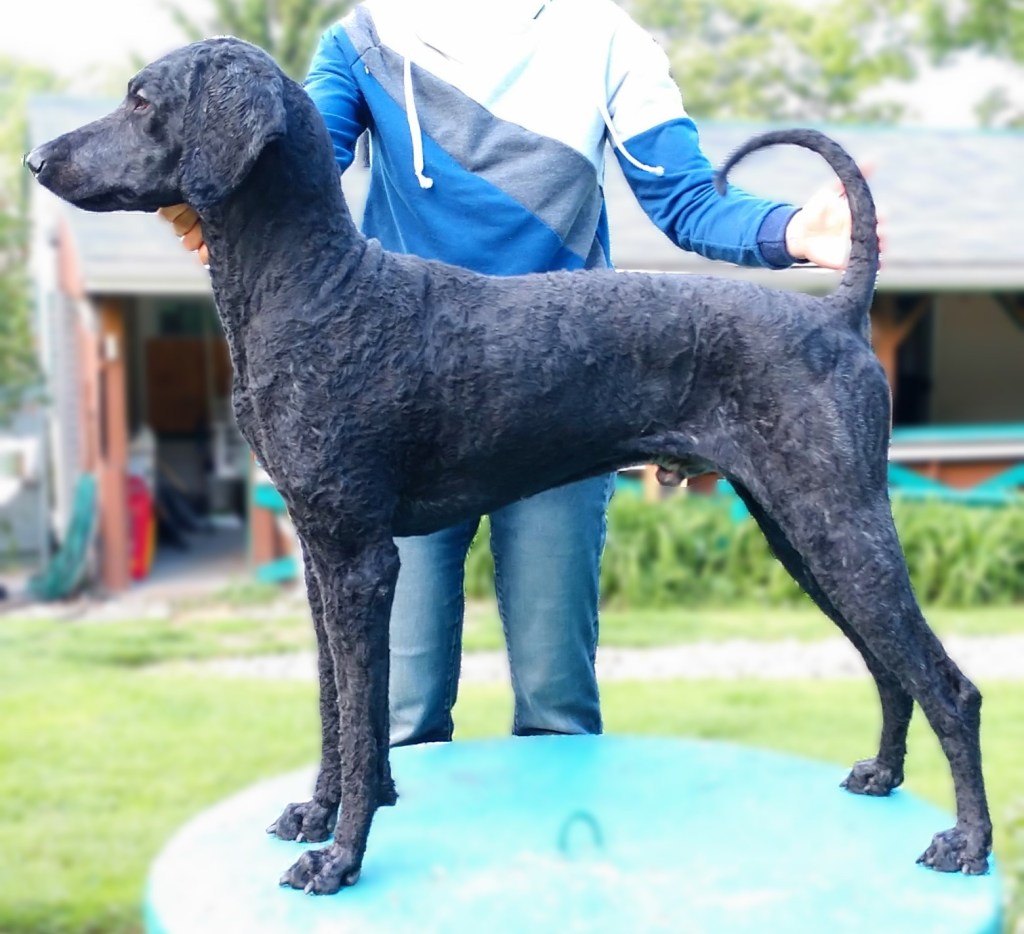
The Benefit of Shaving Poodles
You will notice looking through my website, that I routinely shave my dogs down to one short length everywhere, so that I can very clearly see exactly what is going on with their structure. Every fault is completely in the open, and I take pictures and I share them publicly. I see my dogs’ faults, I see their strengths, and I decide whether they have enough good qualities for me to want to pass their genes on or if they are lacking in a way I don’t feel can be quickly and simply improved upon by careful mate selection. How I would love to see more shaved photos (from multiple angles) of Poodles, especially Champions, on breeder’s websites!
That said, I do love the look of a stylized Puppy Clip, a Continental, and especially a Modified Continental, and I can often be found showing my dogs in these clips.
AKC is Not the Only Kennel Club
I choose to show through UKC (the United Kennel Club) instead of AKC for a variety of reasons. A big one is that in UKC there is much less emphasis on hair, and a shaved Poodle with proper structure will often beat a less sound dog with big hair. Yes, you read that correctly – in UKC a Poodle can be shown and even win while essentially shaved. UKC has a nearly identical written Breed Standard to AKC’s, but they place Standard Poodles in the Gun Dog Group (rather than the Non-Sporting Group AKC places them in), and most judges will award the dog who best fits the Standard *and* gives the impression that they could hunt in the field all day without their body holding them back or wearing down.
UKC is fully supportive of natural tails (AKC is getting better but still far from recognizing them as normal), and UKC is adamantly against products such as hairspray, wigs, coat dye, and painted on pigment – in AKC these are all against the rules yet it is nearly impossible to get a placement without hairspray, and if you examine the class at any given show you will probably find multiple entries with any/all of the other products… the judges and show reps just look the other way and often give those dogs top placements anyways.
UKC is more welcoming to smaller Standards – technically a Standard Poodle is any Poodle over 15″ at the withers (shoulder), yet in AKC you will have a lot of trouble winning with a female under 20″ or a male under 23″ or so. In UKC the majority of Standards are of this more typical size, but many judges are happy to place a worthy Standard well below the average size, 17-18″ or so still have a decent opportunity to finish their championships (though expect some judges to pull out the wicket to measure).
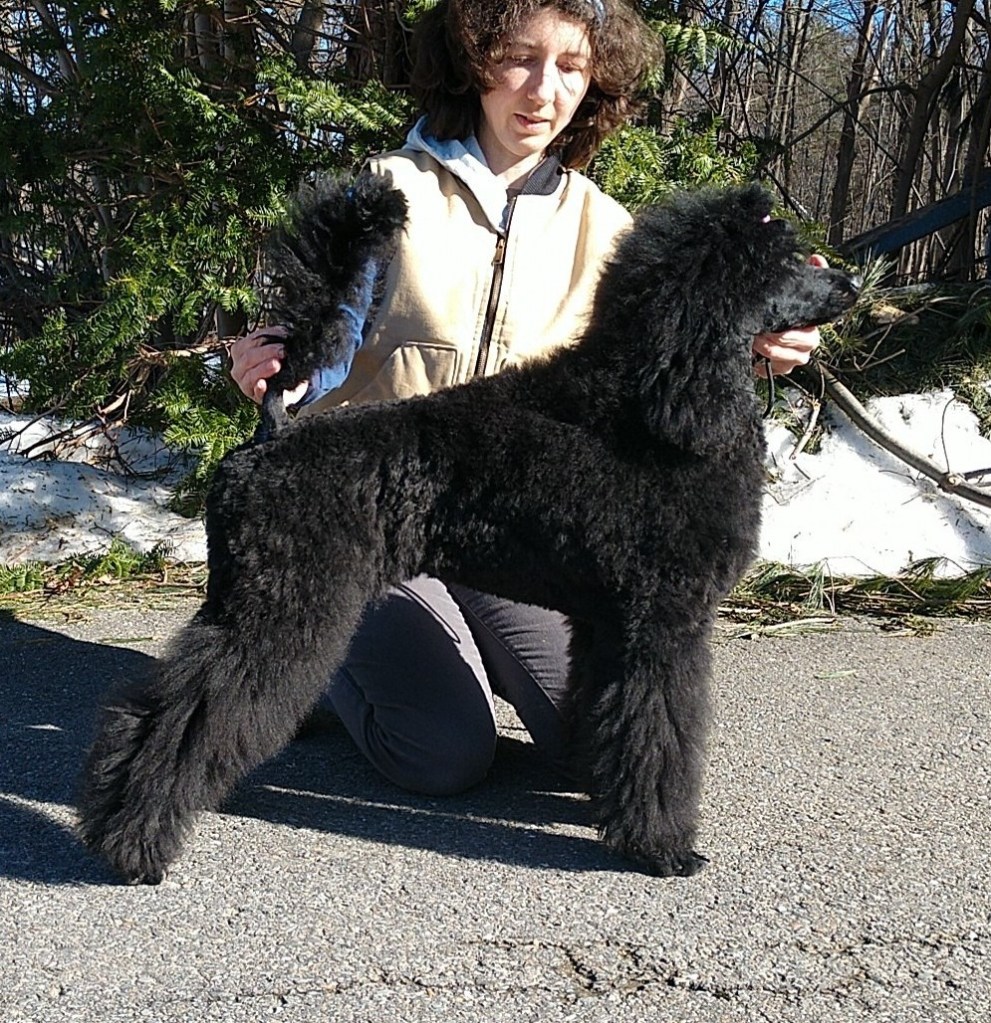
UKC recognizes Multi-Colored Poodles – historically Poodles have always come in a wide range of colors, though AKC and many other kennel clubs around the world have decided that only solid coloration is acceptable. Parti-color is fairly well known (mostly white coat with patches or specks of another color); some of the other color variations include phantom markings, sable, and brindle. Merle is not a historical color within the Poodle breed and is not recognized for registration. UKC and certain other kennel clubs decided to remain welcoming to Poodles with these coat patterns. UKC considers Multis to be the same breed as Solids, but they are shown in separate classes.
UKC strictly prohibits payment of handlers – it is intended as a venue for owners to present their own dogs, but they also encourage that anyone can handle for another owner if they are doing it to be kind or to gain experience – not to get paid; conversely, when I dabbled in AKC with my first serious show dog, Charlie, I was told by a number of handlers that I’d be lucky to get singles on him (win small classes to earn 1 or 2 points at a time), but that if I sent him off with a pro handler he was a really nice dog who would probably finish his championship quickly. That kind of did it for me, to hear that my dog was nice but I’d have to pay someone else thousands of dollars if I wanted him to become a champion. Since that time the AKC has created owner-handler classes, so owners stand a better chance of winning/getting recognition, but it’s still very political… With that same dog and very limited showing, he and I easily finished his UKC Grand Championship often beating AKC Champions and nearly always placing/winning in the Group ring; he won an Award of Merit from the Grand Champion class at the UKC National Poodle Specialty, and he had multiple group placements and a Reserve Best In Show to finish his International Championship the one weekend we were able to compete in that venue.
UKC has Day of Show entries – another personal favorite feature of UKC shows is that they allow day of show entries, meaning I can decide the day or two before the show if the weather is good, if I feel up to grooming and competing that weekend, which dog/s to enter (did anyone come into heat??)… also considerations like whether my kids are feeling sick or my husband has a lot of work, etc. The ability to decide last-minute is very helpful to me at this stage in my life, compared to AKC where entries must be sent in multiple weeks in advance with no refunds if anything happens and an exhibitor can’t make it.
Total Dog events – UKC encourages each handler to participate both in conformation and in sports with their dogs, and many UKC shows will include multiple types of competition at each event, and give out additional Total Dog awards to every dog who earns a conformation competition win (winning points over other dogs) and who also gets a qualifying score in any performance event.
2 Shows per Day – a final big draw for me is that UKC typically hosts 2 shows per day, meaning that for each day of travel and grooming prep we are getting two chances in the ring under two different judges. If we enter a performance event we have an opportunity to earn two legs towards a title. A 2-day show weekend can often mean completing a performance title and can give a dog conformation experience under four different judges. For breeders/owners with busy lives this can be a huge asset.
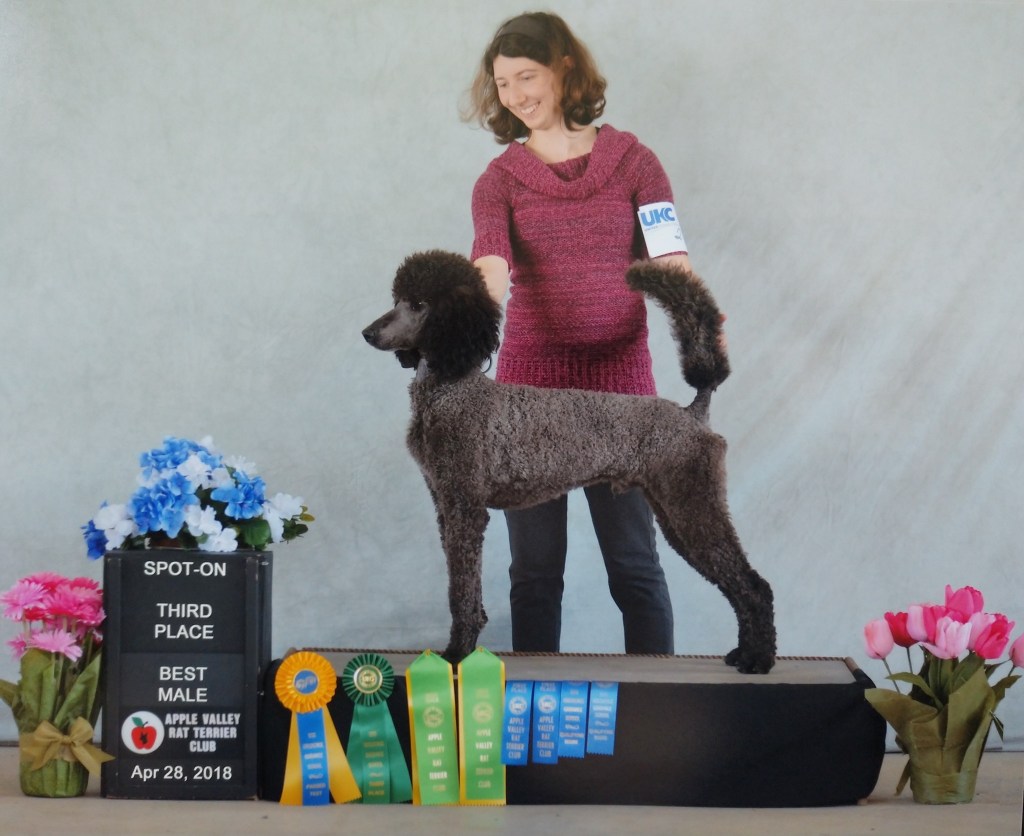
Are AKC and UKC Championships Equal?
No, definitely not. A UKC Championship is much easier to earn and depending on how the wins fall it could potentially be earned having only ever beaten the same other dog/s under multiple judges mostly in one weekend. A UKC Grand Championship is a closer comparison to an AKC Championship; this title requires on 5 occasions winning the highest placement in a given class with at least 3 entered Champions/Grand Champions – this could be within the champion class for your breed, or by going Best of Breed over Grand Champions, or by winning in the Group over enough Grand/Champions. In recent years the AKC and UKC have established higher tiers of Grand Championship titles, each with more significant wins needed to work towards the next level.
The actual ‘quality’ of a dog in question is not determined by what title/s they have earned, as I have mentioned above that any somewhat decent dog can finish a Championship (or UKC Grand) with proper grooming and entering enough shows… and plenty of deserving dogs do not finish titles or even make it to the show ring in the first place for any number of reasons.
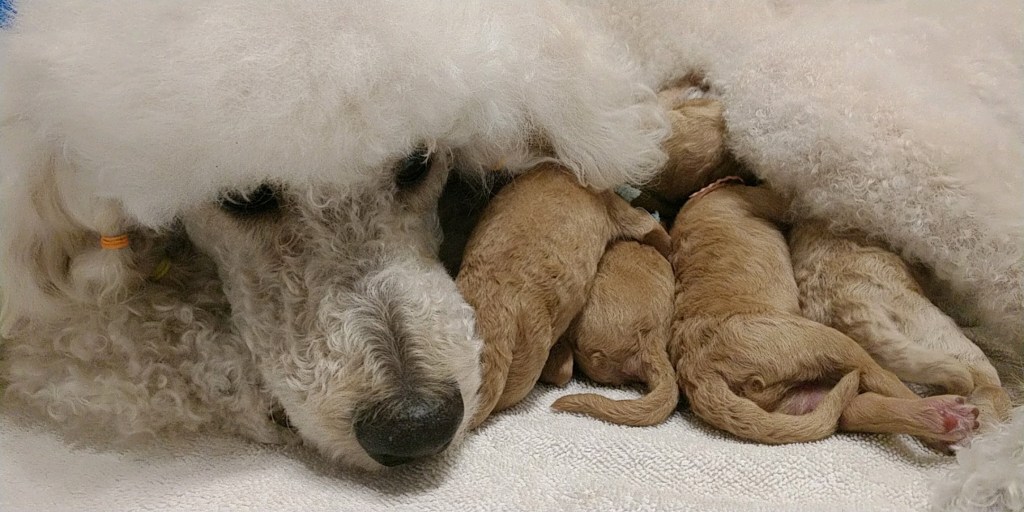
Ultimately a dog’s ‘breeding worth’ rests on their DNA and what they can produce; show accolades or lack thereof will not change the DNA, but titles do offer important information such as the ability of the dog to handle the commotion of the dog show environment, the ability to follow the handler’s directions/judge’s exams as per the requirements for each title, and the verification that multiple judges have assessed the dog and found them to be worthy.


 APAW - Poodle Pups for Working Roles
Leave a reply to Dawn Matheson Cancel reply