
There is no official definition for many terms in the dog world, leaving a bit of flexibility in the interpretation. When seeking a dog as a candidate for a specific purpose it is important to know what you are looking for and to be able to express this to the professionals who are part of your search process – breeders, rescue/shelter workers, evaluators, trainers, potentially veterinarians and groomers, etc.
This post is my interpretation of what defines a performance prospect – many professionals and hobbyists/handlers/breeders have a very similar perspective, and many have a slightly different perspective though all perspectives will have a lot of overlap. There is no “right” or “wrong” definition. My goal here is simply to bring more understanding to the big picture, especially for people seeking a puppy who may see the term floating around and not understand what it means.
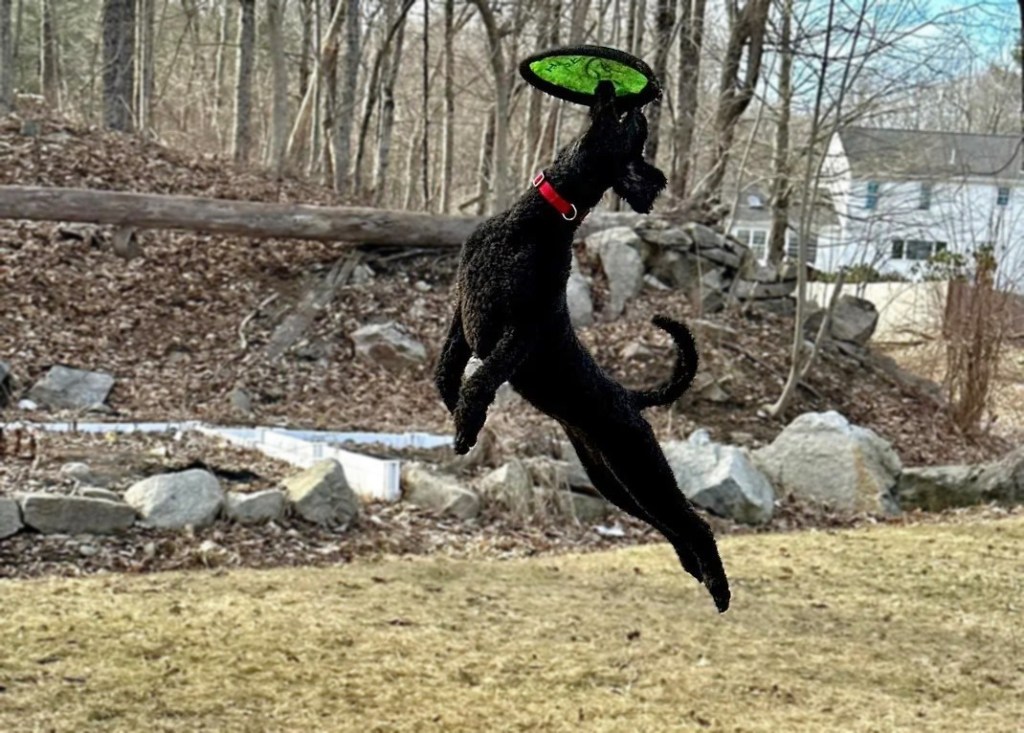
Basically, ‘performance’ refers to dog sports (such as agility, scent work, dock diving, and many more), and ‘prospect’ indicates that the dog demonstrates aptitudes that are likely to make them enjoy and be successful in sports if the handler cultivates those aptitudes.
A Look at Sports
There are many different types of performance sports, and different aptitudes make a dog more naturally inclined towards different sports. Let’s take a look at some examples.
Hunting (bird retrieval)
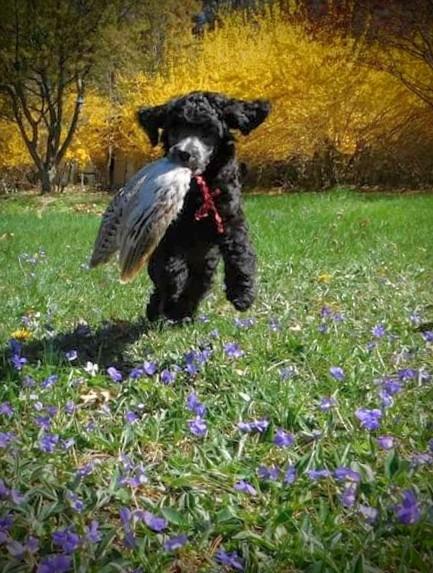
Retrieving shot birds is one of the original purposes of the Poodle, and many dogs still retain key characteristics beneficial to this line of sport/work.
Characteristics include a natural desire to retrieve, a soft mouth, biddability to handler, ability to remain calm but alert until cued to retrieve, great visual tracking and memory for where birds land, work ethic to push through rough terrain and cold waters.
Agility
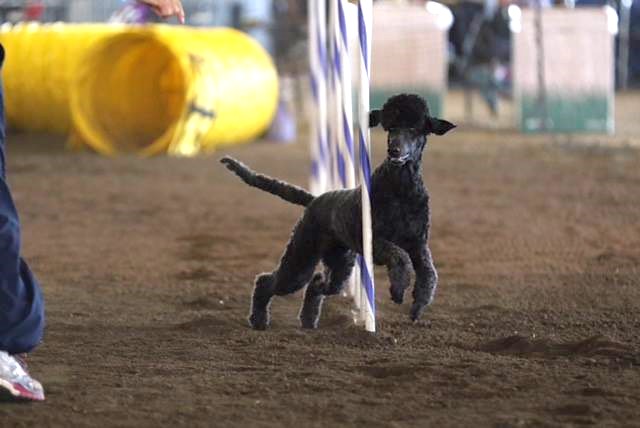
This is a fast-paced sport for navigating an obstacle course of jumps, tunnels, dog walks and weave poles (among others).
Key characteristics include great physical coordination and vision/depth perception, responsiveness to handler amid high distraction and potentially at large distance, confidence on/around moving equipment, ability to bounce between generally calm (waiting their turn) and high intensity (during their turn) at the handler’s cue.
Rally
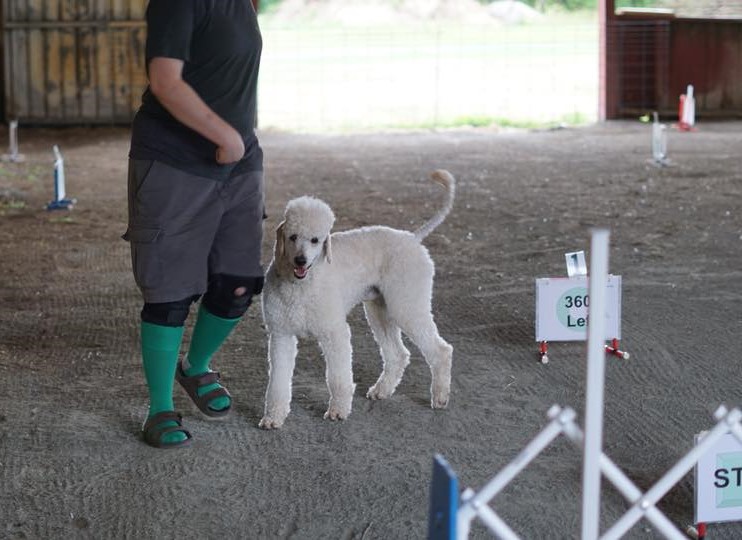
Following a course of signs with written instructions from basic to advanced behaviors. This is often considered a gateway sport into the world of performance events.
Key characteristics include biddability to handler, ignoring distractions and generally handling a show event atmosphere.

Coursing (chasing fake prey)
There are different types of coursing but all involve chasing simulated ground prey (generally a plastic bag as a ‘rabbit’).
Key characteristics include desire to chase, speed, staying on-course, and allowing handler to put the lead back on after the chase.

Scent Work
Again there are a variety of sports for this topic but they all involve a scent the dog has been trained to identify, hidden within a specified area.
Key characteristics include a good nose, strong work ethic and problem-solving ability, environmental confidence, ability to ignore distractions including the handler if they are unintentionally guiding the dog away from the scent.
There are many other sports too, each with their own set of key characteristics or aptitudes.
You’ve likely noticed that some of these activities are very much ‘team sports’ where the dog and handler must work together, and others are very much based on the dog using their abilities somewhat or completely independently of their handler.
You’ve likely also noticed that some of these activities call for significantly opposite characteristics from the dog. For example the sports where focus and responsiveness to the handler is critical, vs the sports where it is the dog’s ability to work and think on their own – even if working on-lead next to their handler – that determine their success. Some of the sports require a certain level of physical dexterity and self-confidence while others can be enjoyable even for dogs with disabilities or lacking in confidence. Strong prey drive is great for some sports, but a challenge for other sports. Desire to retrieve might be necessary or completely un-needed.
Accessibility – nearly all sports are designed to be accessible to any handler, and most sports are designed for at least the entry level to be accessible for any dog who can safely participate in the activity.
Handlers can compete from a wheelchair, dogs can be granted comparable substitutions if a particular cue can’t be executed, teams can compete at slower speeds or lower jump heights, etc.
Top scores will not be possible in all sports, but some may be just as accessible, and all can still be enjoyed as a great activity through which to bond with your dog!
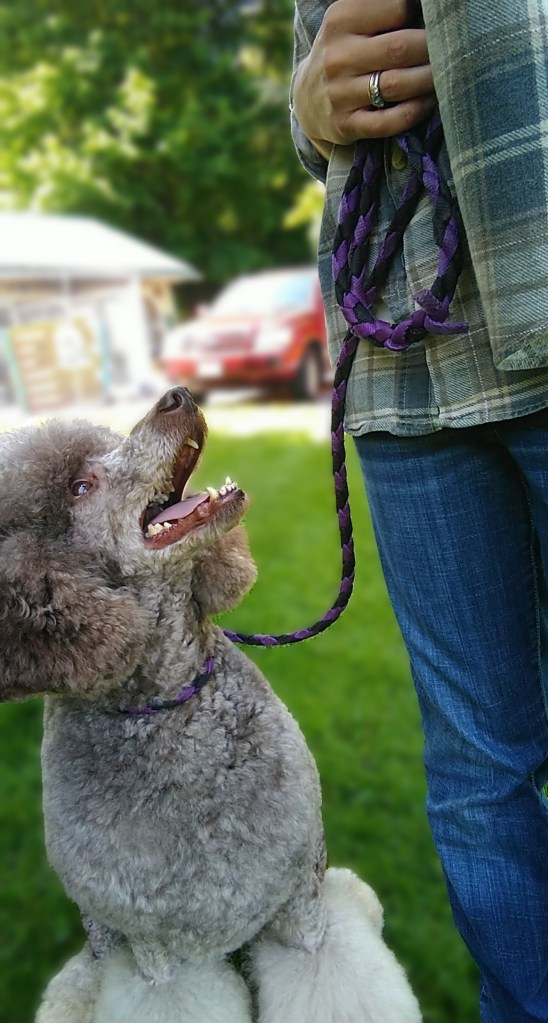
Key Sporting Aptitudes
At this point you probably realize that there can’t actually be a definition for the ‘perfect’ performance prospect, because the best characteristics will vary for each sport.
So what are the primary characteristics that will generally be beneficial in every sport (though not actually required by all sports)?
- Desire to ‘work’ (could mean chase, retrieve, do something for praise, etc)
- Work ethic (this means sticking to it even when there is a challenge)
- Ability to ignore distractions (dogs, people, environment, etc)
- Responsiveness to handler (this may not be critical for specific sports, but it is important for good sportsmanship at event environments and for a general nice life together outside of the sport)
- Ideally – also a structurally sound body and stable temperament
Of note – if you already have a dog who is missing some of these characteristics, there is still a good chance that there are events in which you and your dog can both have fun and find success! There are sports which can be done entirely on-lead, sports with no interaction with strangers, sports with no other dogs in sight, even opportunities for sports performed in your own backyard.
If you are seeking to acquire a dog or puppy for performance events, the above characteristics should be high on your list of traits the dog should naturally possess. These can all be seen in a basic puppy evaluation at 7 weeks old, though a breeder will often see early signs of these characteristics in certain puppies from as early as 5-6 weeks. Older pups and adults will also demonstrate these characteristics if they come naturally. To a good extent these traits can also be taught through experience, but only to the level which the dog’s genetic make-up can support – in these cases it’s important to understand that when under stress most dogs will revert to their natural genetic tendencies, which may mean that in practice sessions the dog can do really well but in the actual trial environment the insecurities or distractibility may come back to the surface.
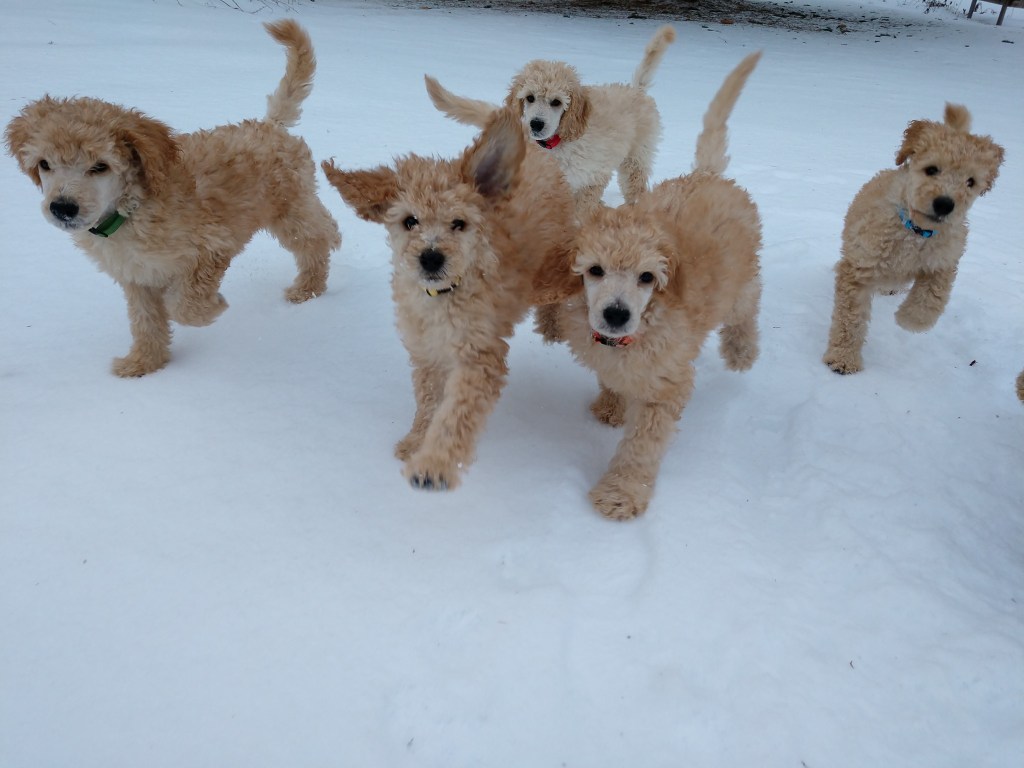
You may already know which sport/s you wish to pursue with your future dog and you can use that knowledge to select other characteristics which will be beneficial – interest in sniffing, desire to chase, speed vs precision (or both!), ability to work at a distance, preference to keep their eyes glued to their person, confidence to handle themselves without much feedback/support, etc.
A Matter of Pedigree
As you have probably realized from my writing thus far, I view the specific characteristics of the individual dog as the determination as to whether they are a ‘performance prospect’. If these characteristics exist in the dog then it doesn’t really matter what their parents were like, or how many titles were earned by their relatives. A shelter dog with an unknown background can be every bit as perfect a performance prospect as a puppy from a pedigree full of performance champions.
That said, if you are assessing an adult dog (such as a shelter dog) you may not be seeing their true self within the abilities of an evaluation. You can determine the presence of certain characteristics if you see them, but you can’t rule out other characteristics until the dog has had a few months to settle into their new home, relax, and feel stable enough to express their true inclinations… which may include fear of strangers, reactivity towards other dogs, separation anxiety, resource guarding, or other characteristics that make life as a companion or especially as a sporting dog a lot more challenging. There also is no health background for most dogs adopted from shelters or rescue, and while x-rays of the joints can help you determine current soundness there is little to learn in terms of predispositions towards diseases like epilepsy, Addison’s disease, auto-immune diseases, family history of cancers, etc.
When selecting a puppy, it is of huge benefit to access and understand the pedigree both for temperament traits and for future health predispositions. In fact, by understanding what the pedigree has/produces you can select a litter where nearly every pup will mature into a suitable prospect for the role you are seeking; however if you are seeking characteristics that don’t run strongly in the family, even the pup who evaluates as ‘best’ for your needs may not mature quite as closely to your ideals as the ‘worst’ evaluated pup from the RIGHT litter.
Yet another important point – titles cost money, time, and access to the training and trialing venues for that sport. High level titles can represent thousands of hours of training, hundreds of trials, tens of thousands of dollars in entry fees and traveling/hotel fees, etc. The investment in time alone can often be unattainable for breeders who have other dogs at home to care for, and especially when they have a litter. As a result, high level titles are often found in the ‘vertical pedigree’ which includes the siblings of each generation, and the dogs with those top titles are often dogs who were placed in performance homes whose focus was on training and trialing a small number of dogs, and those dogs are generally not the dogs who are bred for the next generation, especially the females (heat cycles are a significant challenge when entries must be sent weeks in advance, not knowing if a female will be in heat or when she’ll be back out of heat – many sports dissuade or prohibit females in heat from competing or even coming to the show site).
Many titles can also be earned despite various challenges, so the presence of a title doesn’t guarantee that the dog was actually a good candidate – it may have taken years of training and many failed attempts before finally meeting the requirements to earn the title. For this reason I caution prospective homes that just because there are titles on the parents does not automatically make the pups ‘performance prospects’. Yes there are likely some prospects in the litter with aptitudes suited for at least some sports, but it does not guarantee that any or all pups will be suitable for the specific sport/s that the home is interested in.

On the flip side, a pedigree can be filled with dogs who have excellent performance characteristics but did not earn titles to prove it – very often it’s just a matter of the dogs living with owners who aren’t interested in competing in sports, even if their dog is impressive catching a disc, or can fly over and balance on any obstacle, or routinely catches rabbits in the back yard, or is the sweetest and most biddable dog joyfully heeling along as they run errands at the pet store and take walks around town. And as I mentioned, it is often the case that a breeder themselves may not have the time/funds/ability to travel to put high level titles on their breeding dogs, especially prior to the age when breeding typically takes place. Many dogs even earn their titles after their breeding career is over.
So – evaluating the dog itself is most important; assessing the pedigree is a wonderful asset; and going to a breeder who can honestly tell you about many family members in the prior generations is priceless.
Pedigree aside, it’s also very worthwhile to select a breeder who themselves has a good understanding of training concepts, temperament assessment, and how to identify the key characteristics needed by the sport/s which the prospective home is interested in pursuing.
… What if we don’t do sports?
A performance prospect can still be a wonderful, happy companion dog for the right home – most dogs who evaluate well for sports don’t actually *need* to become sports dogs! However, the drives and characteristics that lend towards being a performance prospect will still exist and need to be channeled and given proper outlets, or the dog is likely to develop problem behaviors. This means assuring the dog gets enough physical exercise, enough mental stimulation, and enough training and channeling of their impulses that they are an enjoyable partner to live with. A good performance dog should have an ‘off switch’ and be able to be a calm companion in the home, but will require having their active needs met regularly through-out their lives.

Don’t get a pup described as a performance prospect if what you really want is a dog content to snuggle on the couch with just an occasional walk!
I hope this article has been helpful in your understanding of the term ‘performance prospect’, and that if you are seeking one you now have additional terminology and considerations to help you in your journey towards finding your perfect partner!

 APAW - Poodle Pups for Working Roles
Leave a comment