
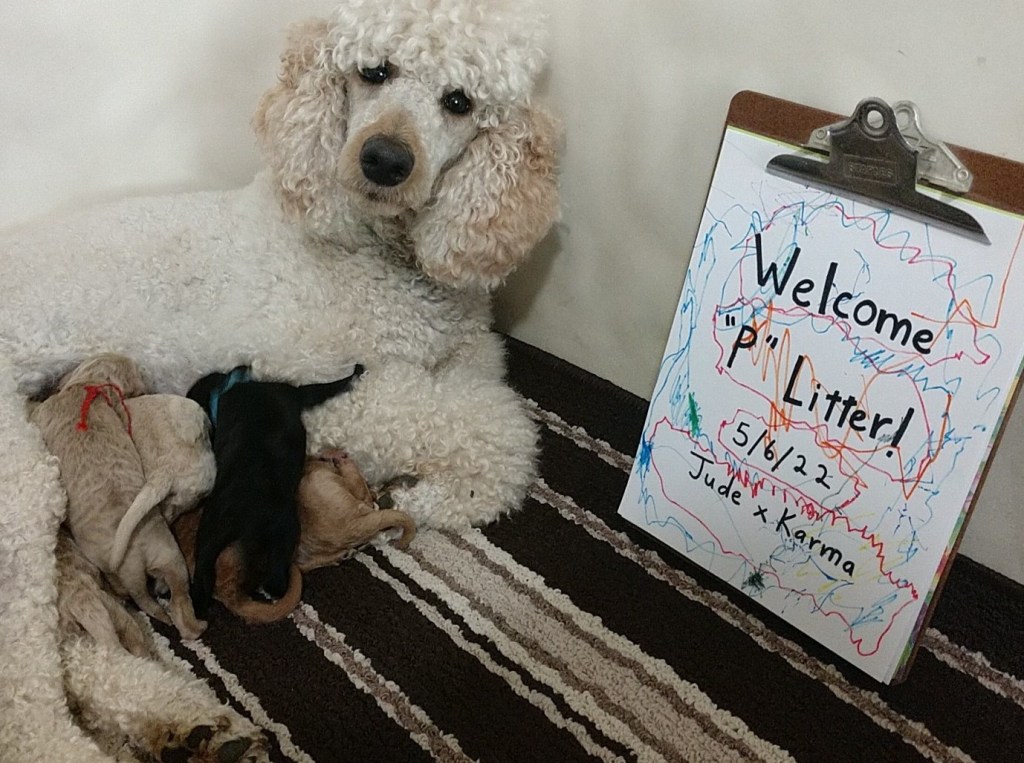
Short answer – going through the alphabet helps track relationships and the development towards our breeding goals.
The APAW breeding program started with a large and long-term mission of breeding towards specific goals particularly focused on cultivating the combination of temperament characteristics (and lack of other temperament characteristics) needed for the working roles we focus on, and on developing lines with strong genetic diversity. Health and breeding to the written Breed Standard were of course also always very important to us, but the temperament and diversity are the characteristics that were initially hard to find and were known to be a multi-generation project.
Many breeders who anticipate a larger-scale breeding project choose to identify their litters by going through the alphabet, as it helps signify ages (and how ‘far’ into the breeding program the litter represents), and it is easier to recognize relationships of each dog. This practice is especially common in the assistance dog industry. Other breeders choose litter themes, such as characters from a particular series or historical figures, or a theme representing a concept or category of anything – in many cases these names/themes are temporary during the time with the breeder, though the registered name may retain some reference to the original theme. This is a wonderful and fun naming style, but it tends to mean every relationship needs to be individually memorized if anyone wants to keep track. Many other breeders do not create themes at all, and identify pups and litters with any names they desire.
For example, in tracking litter characteristics, our L litter brought in some very different genes than most of our prior litters – it is very clear that as a whole the pups in that litter are more intense and driven than many of the litters that came before them; all a person needs to remember is that the L litter is a strong performance-bred litter, and they will recognize by name which dogs are from that litter, and thus also recognize that any litter down from an L pup will likely have more of those characteristics as well. Our K litter is much more sensitive and reserved. Our G litter is stunningly good-looking. Some of our litters have really strong biddability and motivation across the board regardless of energy or drive levels each individual inherited. Some litters tend to be extra social with strangers, others tend to be really focused on their own handler, etc.
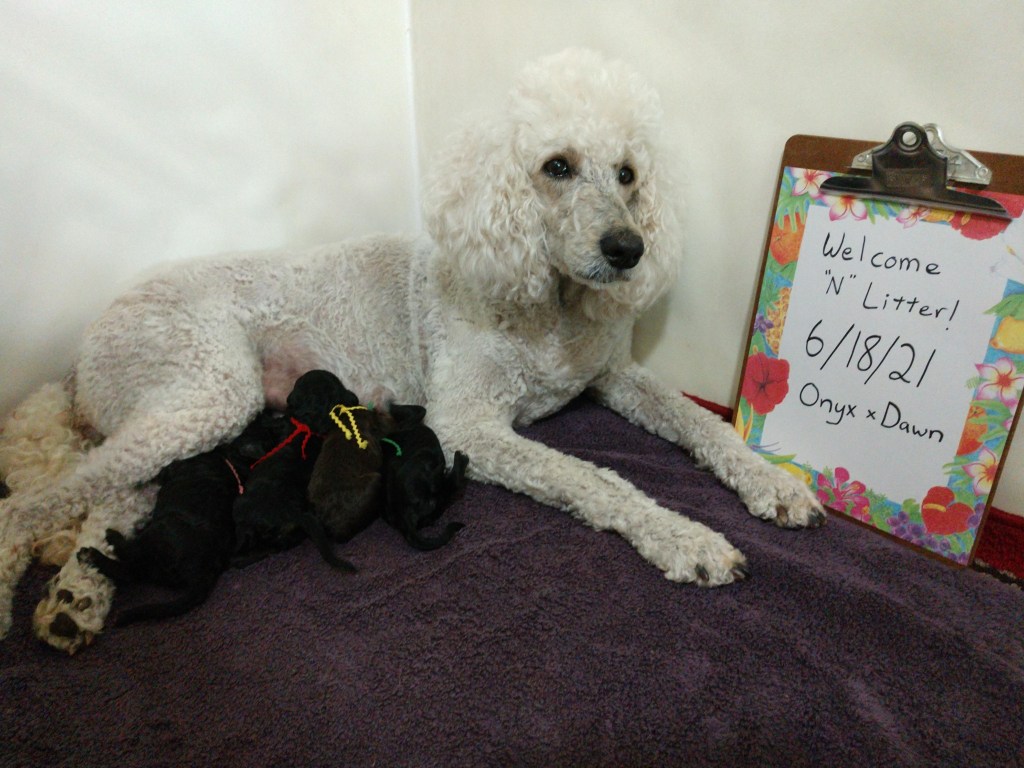
Of course every litter produces pups with a range of characteristics (in temperament, diversity, looks, health, etc), and most of our litters produce some driven performance candidates and other pups on the calmer side of the spectrum, with most of the pups around the middle of the spectrum. But keeping track of the development of the whole litter helps us understand the strength and heritability of each of those characteristics, which guides our future mating selections as well as helping us to predict how pups are likely to mature and can add another aspect to our matching process of each pup to their best home. The further into our generations of breeding we get, the more data we have from both sides of the pedigree to increase the accuracy of our predictions across a litter and within each pup individually.
Back to the letter theme, here’s how it plays out; every pup that we keep will always receive a call name starting with their litter letter. We strongly encourage our puppy homes to select a name with their litter letter, but ultimately it is their puppy and of course they can pick any name they feel a strong connection to.
Our letter theme only applies to the call name, as that is how each dog is known, and that’s how connections are kept track of. Registered names begin with APAW or APAW’s but are otherwise open to anything and are encouraged to be perfectly customized for the individual dog.

Here are examples of how the letter theme can help a person (breeder or otherwise) keep track of various details even for a large number of dogs with very little memorization needed:
- Each letter represents a more recently-bred litter, so D’s are younger than A’s, B’s and C’s but older than every letter after
- The H litter produced Hercules, Hope and Haven (and others), so the offspring of each of these dogs are direct cousins – that includes the J’s, K’s, O’s, R’s, S’s, and U’s
- It becomes easier to identify/predict developmental stages and when they are likely to occur in a given line (notably any fear stages, trouble with separation training, house-training reliability, and when adult maturity is likely to kick in), and age/length likely of first heat cycles, etc
Here is a more specific example of learning the characteristics a particular line tends to produce:
- Lots of offspring down from Denali tend to be extra vocal (her registered name is Pirouette Call Of The Wild Tudorose, if that suggests anything…), and that tendency is stronger overall in our G and L litters, and noticeable to varying extents in the next generation down which includes the Q’s and V’s (yes, only 9 days old as of writing this article but it has been very apparent within their first 24 hours of birth, as it was with the G litter!), as well as our Harry (Sarsel’s Music Of The Night) who is a Genesis son from Sarsel Poodles; knowing this trait runs in the line can help us avoid placements where barking could be a deal-breaker, such as apartment homes where the dog will be alone most of the day, or disabilities where sudden sharp noises are painful or triggering
Of course you don’t need naming themes to keep track of details like this, but it does help emphasize litter-wide traits even if you aren’t intentionally looking to find them.
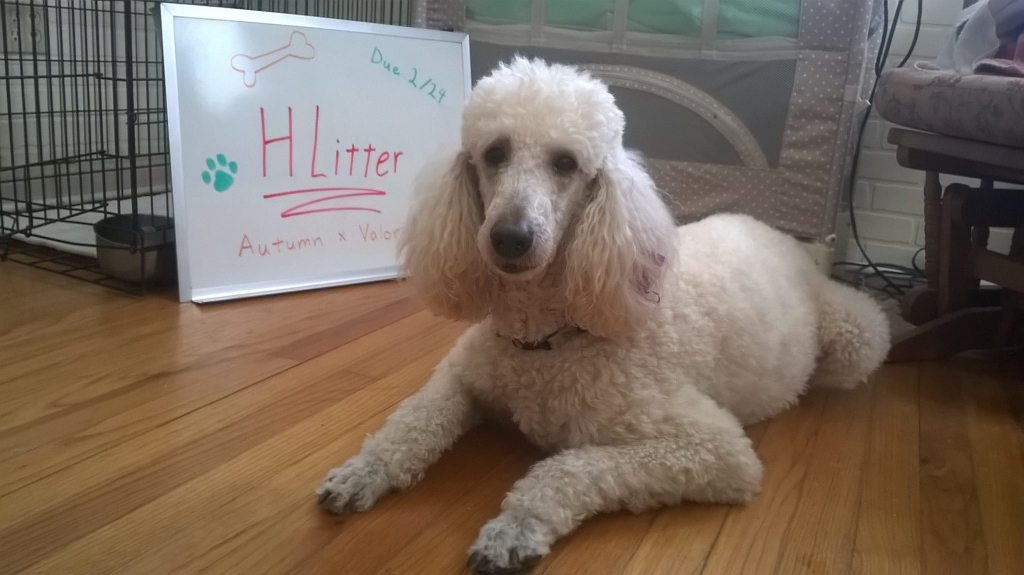
What happens when we finish the alphabet? We’ll start over again at A. Our first A litter was born in 2010, so there will be a very large age gap for any of the original A litter who are still living when the next A’s arrive – it will be quite clear that photos or updates shared are either a golden oldie or recent generation. We’ll make sure that homes on the puppy list for each recurring letter will know the names of the original litter, so that they can easily select a different name unless there are very strong feelings for a specific name. In the event that a name is chosen as a repeat, we will let the family know that in written contexts such as on our website or when posting on Facebook that we’ll include an additional reference, such as ‘II’ or specifying the litter.
 APAW - Poodle Pups for Working Roles
Leave a comment