

(The dog, not the handler!)
Any dog with a “decent” temperament and a “decent” amount of basic obedience training should be an overall easy dog to work with on or off-leash in most settings. It is an obtainable expectation of the average dog and owner, and may not even need much effort to achieve.
The ‘trick’ is in not accidentally teaching the dog to ignore you.
3 Big Mistakes Owners Make
- Physically controlling the dog
- Foregoing foundational skills
- Failing to reward the dog enough
When these 3 areas are resolved (or ideally avoided in the first place), the leash becomes a polite connection instead of a means to control.
Defining “Decent” within the context of this article
Decent temperament – no extreme emotional or instinctive reactions to stimuli; if these exist then it will take additional training effort in triggering settings. Depending on safety factors it may never be appropriate to actually remove the leash, but a dog can certainly learn to respond without pressure.
Decent training – reliable basic skills such as cued attention, walking at your side, sit, wait, nose-target to your hand. Off-leash reliability naturally grows as a dog learns more skills, but only basic communication is truly needed.
How Trainers Avoid these Mistakes
Many trainers who work with young puppies (especially prior to leaving their littermates), as well as those training service dogs for clients with significant physical impairments, choose to train without any gear – no collar, harness or leash. Dogs may be taught how to wear and ignore the presence of gear, but it is not used to physically alter any of the dog’s choices.
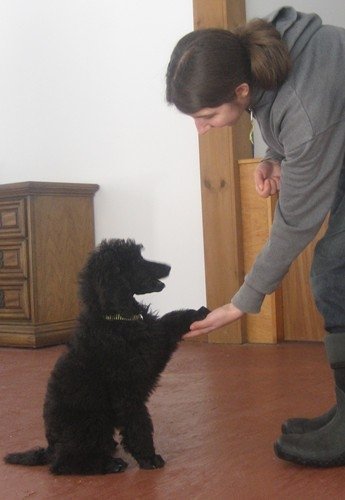
We use motivation, set the dog up for success, and reinforce their attempts at the lessons we cover. In so doing we build their desire to work with us and to keep trying even if they don’t get it correctly at first. We remove any fear of being corrected for a mistake, and we keep stress low and reinforcement high so they keep choosing to try again.
As dogs progress to higher levels of training we carefully add stressors within their ability to handle (small distractions building to more challenging; simple skills becoming more complex). And we continue to reward strongly for the dog making the choice to keep working. At higher levels of skill each trainer’s methods can vary as to whether corrections may be implemented under certain circumstances versus remaining entirely force-free or somewhere in between.
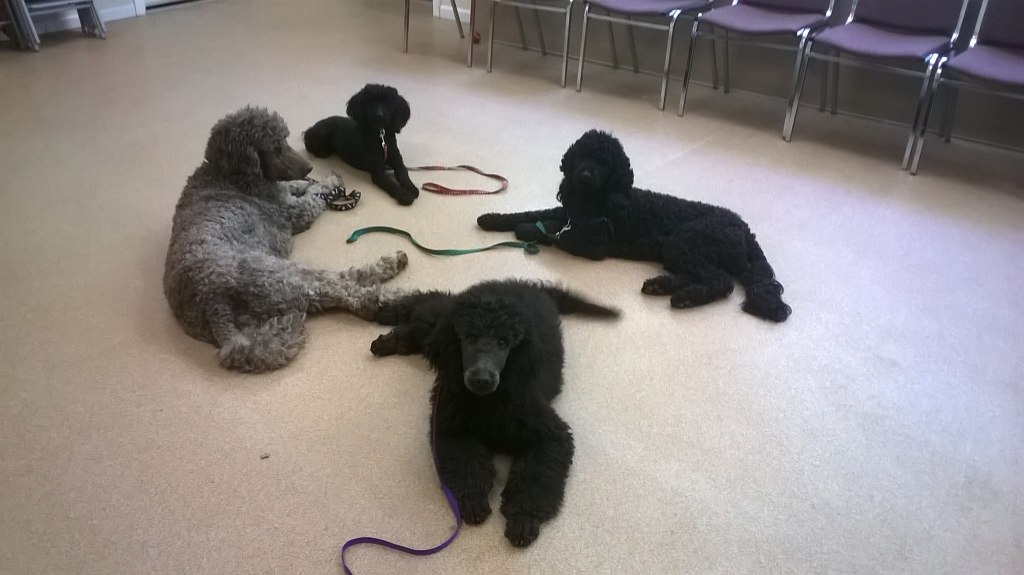
After teaching the dog’s skills in a safe and calm environment, the leash is put on almost as an after-thought when we head out to a more distracting setting. Often from the very first outing a trainer is seeking safe opportunities to practice dropping the leash or draping it over the dog’s back while working on the “off-leash” skills the dog is accustomed to. As the dog is ready in various settings, they are building off-leash distance in public for basics and tasks, so that they become reliable working partners wherever they go.
Mislearning from the 3 Big Mistakes
- Physically Controlling the Dog – Using a leash, harness, your hands or even you voice and personal presence to exert control over your dog instead of letting them make choices.
When you control the dog you take away their chance to process the information of what you’ve cued and how it relates to the current context. The use of physical control also lets the dog ‘tune out’ because you are the one making them move, which tends to give them more opportunity to focus on distractions in the environment.
Instead, control your environment and give your dog choices and time to think them through. Choose a training location that has minimal distractions, is safe for your dog, and set aside plenty of time. Make sure your dog is in an appropriate mood for learning – hungry (if you are using food rewards), playful and ready to engage with you. As your dog’s skills build you will find they are ready to train in more challenging environments.
- Foregoing Foundational Skills – Neglecting to teach basic communication and life skills, like when to pay attention to you, when to move and when to stop moving.
Basic obedience and critical life skills are the foundation for all your dog will experience; to ignore teaching these skills is to stifle your dog’s capacity to make appropriate choices throughout their day-to-day life.
Instead, take the time to actually teach your dog to respond to their name, to turn away from a distraction, to come to you, to walk along at your side, to put their own body into a position (sit, down, etc), and pause in position briefly while focusing on you. These few simple skills will open up a whole new world of companionship.
- Failing to Reward your Dog Enough – even after teaching these skills, your dog may stop performing if they no longer feel rewarded.
Doing what other people want isn’t often fun, especially if you’d rather be doing something else. Your dog feels the same way. Just as you expect a paycheck from your boss and a hug or a “thank you” from your spouse, your dog wants to be acknowledged for their effort too.
Instead, be sure to continue to reward them for responding to your desires. While you can certainly fade out frequent treats as you train each skill, you do need to make sure your dog feels appreciated and has fun working with you. The occasional tasty treat, ear scratch, toss of a ball, belly rub and sometimes just a simple, heartfelt smile and “thank you” will all keep your dog happy to be your partner.
Exercises to Build These Skills
Exercise #1 – Building Attention, Name/Recall, Recall Off Distraction, Following a Lure, Navigating the Environment
Before dinner, close other pets out of the living room. Get your dog’s bowl of food and a handful of extra tasty treats also in the bowl, and bring your dog into the room.
- Show them the bowl of food, get them happy and excited to eat, then roll a kibble across the floor telling them to “take it” (use whatever cue gives them permission to eat it – “release”, “cookie”, “go get it”, etc)
- As they eat it, praise briefly and as soon as they are done eating offer one of the good treats from your hand and say their name and the cue to “touch” their nose to your hand (“Good boy! Fido, here!”)
- Praise again as they eat the treat, and add in some petting or a little play if your dog likes that
- Repeat steps 1-3 a few times: chase a kibble, come back for something delicious
- As your dog gets the rhythm, start walking/running away as they eat the kibble so they need to ‘chase’ you to get their good treat, and continue to praise and offer very brief play
- You can also practice just moving your hand around for them to chase the treat – have them go around you, through your legs, under a table, onto the couch, etc. No extra cues are needed, just encourage them to chase the treat and touch your hand however they can – no corrections, if they get too excited just gently calm them down
- While your dog is still having fun, end the game and give them dinner (if they are excited enough to be breathing heavily, settle them down first with a gentle massage).
This exercise will teach your dog to choose to engage with you. It becomes a fun game you can play any time and anywhere, including out in the yard, on walks, and out at pet stores. This game is a form of “engage/disengage” which is a training protocol that can be used to build owner-attention in the face of distractions even for dogs who have reactivity (over-excitement, barking or lunging at other dogs, people or another trigger).
Exercise #2 – Walking with You, Building Attention, Name Response, Ignoring a Distraction, Following a Lure
Inside with low distractions and a hungry dog, get a handful of treats and/or a toy your dog loves to fetch (and bring back) or to play tug. Similar to Exercise #1, encourage your dog to walk/run along next to you as you move around and change direction abruptly as in play. When giving the treat/toy, present it directly at your side where you’d like your dog to be – for pets and many service dogs a good position to give the reward is along the seam in your pants; this is more of a following position compared to the leading position of the dog’s shoulder/ear in line with handler’s leg that is common in competition obedience (you can teach a competition heel on a separate cue if you want both). You want to build your dog’s value for being at your side with attention on you.
- Give your dog a treat for standing at your side
- Cue “let’s go” (or your informal cue to walk along with you, “with me”, “come on”, etc) and take 1 step with the foot closest to your dog
- Stop and give a treat at your side – your dog may even be confused because they only had a chance to step a few inches since the last treat
- Praise your dog for standing next to you, and feel free to also practice longer pauses with more treats doled-out for remaining attentive at your side
- Cue “let’s go” and take another step, stop and treat at your side
- Praise or treat again for standing still at your side
- Repeat a few times and then give your dog an obvious release cue (“release”, “okay”, “play time”, etc) to signal that the exercise is finished, and play with your dog with a toy or by petting
- Lure them back to your side, treat, and then repeat steps 5 and 6
- Add more steps in random increments, 1 step, 3 steps, 2, 4, 1, 5, 2, etc, continuing to treat them at your side when you stop
- As you hit around 3-5 steps you can also start adding turns away from your dog (quarter turns or U turns); present a treat at your side and say your dog’s name or repeat your informal walking cue just as you are turning away from your dog, and pause to feed the treat within a few steps
- Build your distance, and practice around distractions to pause with your dog at your side as well as turning away from distractions to follow you in a different direction
This exercise also teaches engagement with you, now while moving through a changing environment. This exercise will make outings much more enjoyable when the goal is moving along together (as opposed to a ‘sniffari’ where the purpose of the walk is to give the dog time to explore at their leisure).
Remember – above all, focus on building a happy and engaging relationship with your dog. With that, everything else will easily fall into place.
You may be surprised by how soon your dog is ready to work/train/play with the same enthusiasm and precision whether they are wearing any gear or none at all!
If you enjoyed this article be sure to check out my other posts, and add your email to my list below to receive a link to each of my future articles. Now go have fun with your dog! 😉
 APAW - Poodle Pups for Working Roles
Leave a comment