
As a dog owner, Halloween is one of the most potentially dangerous holidays we celebrate. We need to support and protect our dogs for them to safely navigate this onslaught of spooky visitors, toxic candies, and many opportunities to accidentally run out the door.
In this 2-part series we look at the following dangers and how to prepare your dog for lower risk:
- Seeing Decorations and Trick-or-Treaters
- Answering the Door
- Avoiding Candy Ingestion
- Taking a Walk (in costume or just to potty)
- Management and Safety Precautions
In Part 1 we focused on what you can practice to help your dog feel comfortable when the big day arrives. Here in part 2 we’ll focus on a safety overview for you to keep the evening smooth and the risks low.
Avoid Candy Ingestion
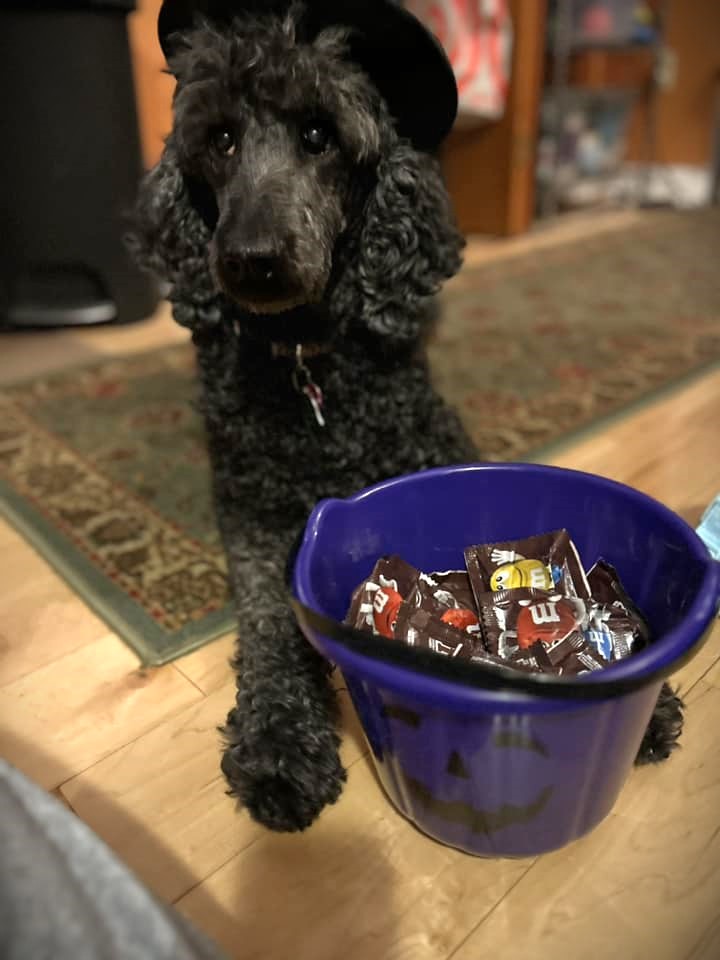
We all know candy is unhealthy for dogs, but certain types of candy have potentially serious/fatal side effects for our dogs.
Keep all candies out of your dog’s reach, and make sure any children around your dog understand not to share theirs.
Practice your “leave it” cue even for offered dog treats, so your dog knows to wait for your permission before accepting food from someone.
The following is a brief list of toxic ingredients that are found in common candies, each with a link to learn more:
- Sugar-free gum/candy/breath mints (xylitol aka birch sugar is FATAL even at very low dosages)
- Chocolate, especially dark (theobromine is the main toxin and can be severe/fatal in readily consumable amounts, as well as caffeine which is unlikely to be severe in amounts found in chocolate)
- Raisins (tartaric acid can be fatal at low dosages – amount varies in raisins/grapes based on factors such as level of ripeness and where they were grown, so assume all are dangerous though not all will lead to symptoms)
- Macadamia nuts (macadamia nut toxicity is rarely severe)
- Various sugars and fats are unhealthy in general and can lead to pancreatitis, though they are not specifically toxic to dogs
- Other candy risks – wrappers and lollipop sticks can also cause choking, obstruction, or injury that could potentially be urgent and/or fatal
Here is an amazing list of Xylitol-Containing Products compiled by PreventiveVet.
Here is a Chocolate Toxicity Calculator, including theobromine amounts in various common candies/chocolate products.
What to do if your dog does eat candy?
The type and amount of candy will greatly affect how best to respond. In many cases there is no significant concern, just be prepared for vomiting or diarrhea in the next day or two. However, if your dog eats a toxic quantity of any of the above ingredients, you do need to act quickly. If your dog ingests xylitol or raisins the poisoning can take effect within 20 minutes; chocolate takes closer to 2-12+ hours before symptoms begin.
Some treatment may be recommended at home, either in place of or prior to heading to the emergency room, especially if it is a long drive to an open ER. Treatment may include inducing vomiting to get the toxin out of the stomach before digestion; giving activated charcoal to absorb the toxins within the body; increasing hydration to flush the toxin out and reduce damage to the kidneys – depending on the situation this may need to be in the form of IV fluids for up to a couple of days or until the dog is stable. If vet care is indicated there are additional medications that may be given to counteract the toxin or the symptoms.
Call an animal poison control hotline to determine how urgent your situation is, and how to proceed. Here is the ASPCA Poison Control – (888) 426-4435. Be aware that a consultation fee may apply, but it will be less than an emergency vet bill and if vet care is recommended this consult will help speed the treatment process.
Know your closest 24/7 Emergency Vet, which may not be local – particularly since the pandemic a lot of veterinary hospitals have reduced staff and are not open at all hours… and even if they are open, not all ERs have the capacity or resources to handle all emergencies referred to them. Call ahead to verify they will see you, otherwise have a list of back-up vets to call.
How to Induce Vomiting – 3% hydrogen peroxide can be given orally and will generally cause a dog to throw up within 10 minutes. The dosage is about 1 teaspoon per 10 lbs of body weight (or 1ml per 1 lb), but not more than 3 tablespoons total. There are many situations where inducing vomiting is not a safe treatment, but it typically is appropriate after ingestion of the types of toxins found in candies (if the toxin type/amount is considered dangerous in the first place). Vomiting is most effective at removing the toxin when within 1-2 hours of ingestion. 3% hydrogen peroxide can be found at any pharmacy, often in the first aid section.
How to Absorb Toxins in the Stomach – Activated charcoal can also be given orally. It will absorb toxins from your dog’s system and it is often recommended for dogs who have ingested any toxin that will bind to it. The toxins and charcoal are then pooped out, and poop will be black until the charcoal is out of your dog’s body. The activated charcoal dosage is about .5-1.5 grams per lb, and can be given every 6-8 hours or so until seeing your veterinarian the next day (if the toxin/amount is not considered an emergency). Activated charcoal is safe to give, but it can cause dehydration so make sure you keep your dog hydrated. Find activated charcoal capsules in the dietary supplement aisle.
After the fact – how to help your dog’s gut for a smoother recovery. Any time a dog has stomach or intestinal stress including diarrhea, probiotics can help replenish the proper balance of healthy bacteria in their gut. Probiotics are actually beneficial as a daily addition to your dog’s diet anyways, but especially during and for a period after any health issues. Probiotics are typically available in any store with a pet health section – here are two brands that I feed my dogs:
Taking a Walk on Halloween
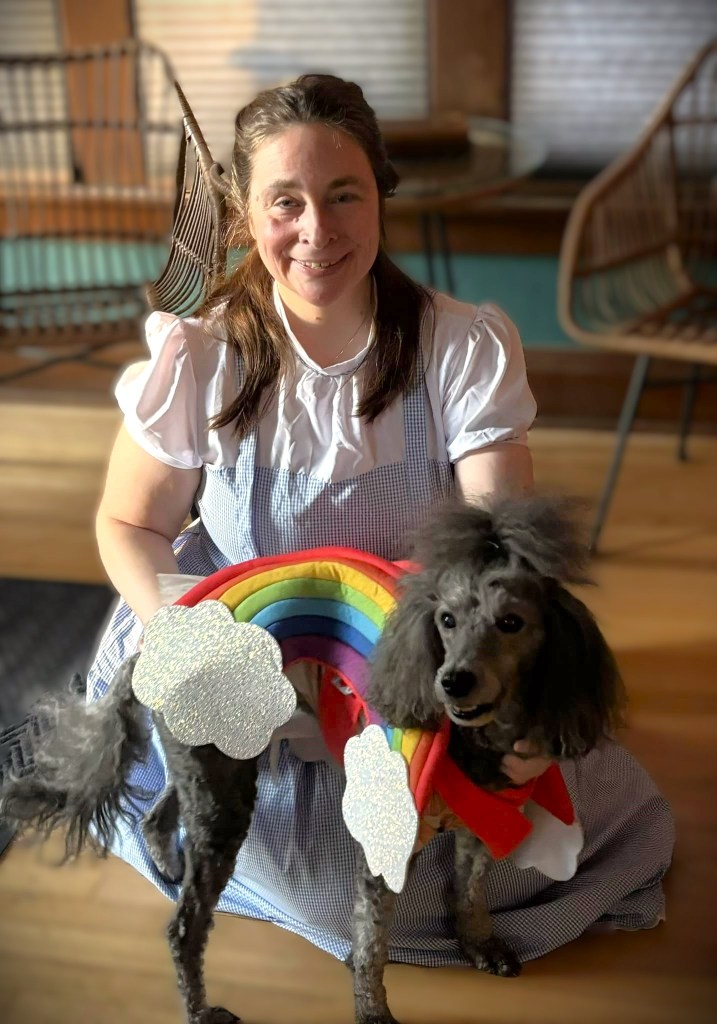
It can be a lot of fun to bring your social and polite dog along when you go to a party or trick-or-treating, especially if they enjoy dressing-up too!
Here are some tips for happy and safe dog inclusion for your holiday outings. Even if you are just popping out to give your dog a potty break, these tips might be helpful to keep in mind.
- Keep your dog on a short leash (no Flexis!), and keep them right at your side when around other people.
- Even at a private gathering in a home or yard (even your own!), keep the leash on – this is the best way to be sure your dog doesn’t sneak any candy or scoot out an open door/gate.
- Don’t let your dog solicit attention from others unless you know the person and know they want to interact with your dog.
- Don’t let your dog pee on or trample decorations or any other part of someone’s private property, including bushes and flowers.
- Do pick-up any poop your dog has, and bring a flashlight to really find it all, especially if it’s anywhere along a walking path likely to be taken by trick-or-treaters.
- Bring treats to give your dog if they are nervous of a decoration or costume, and keep them at a comfortable distance. **I recommend for only YOU to give treats – trick-or-treating is not the time to expect other people to go slowly to create a positive experience for your dog (that should be done as practice sessions prior to Halloween). It is also better to prevent your dog from eating anything from other hands, to avoid the chance of poisoning.
- If your dog gets scared/overwhelmed, quickly move them to an area with less stimuli. Factors add up and can push your dog over their threshold quickly… they may generally be fine with all the sights individually, but when stacked they can be overwhelming… tons of strangers, in costumes, many running and excited, at night, around spooky decorations, scary noises, other dogs barking, etc. Especially going down narrow walk-ways with costumed strangers jostling and bumping along can be very nerve-wracking for a dog.
- Don’t take your dog to the door of a house with another dog at the door or barking at a window or fence.
- If bringing your dog to a door, keep them at your side on the walking path intended by the property owner. At the door/porch don’t let your dog move forward to interact with the home-owner unless it is a calm moment and they invite an interaction.
- Politely decline if someone asks to pet your dog, but you can offer to show a trick instead. **Use your judgement, some situations will be totally fine and comfortable, but skip interactions where your dog is nervous of a costume, or there are many people jostling around, or when the person asking has too much energy/excitement in their demeanor.
- Just smile, wave and continue on down the street if it seems that a home is scared or not welcoming of your dog on their property.
- Consider a reflective or lit leash/collar or tag to help others see your dog as it gets dark out.
- If dressing your dog up, keep their comfort and safety in mind. Make sure they can move without uncomfortable restriction and have good vision.
- Consider the reactions others will have to your dog’s costume – it is better to pick an outfit that will cause positive responses rather than to startle/scare others. Your dog doesn’t know how they look, and will assume the reaction is based on their presence/behavior.
Management and Safety Precautions
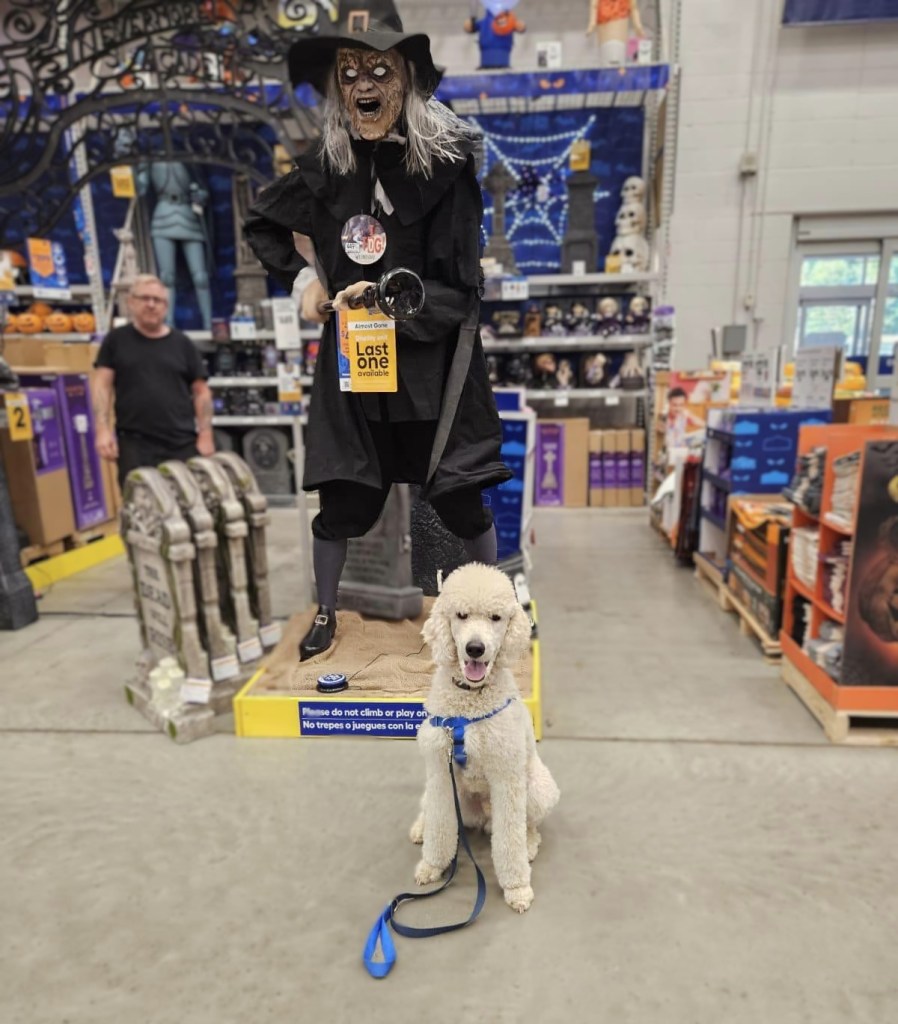
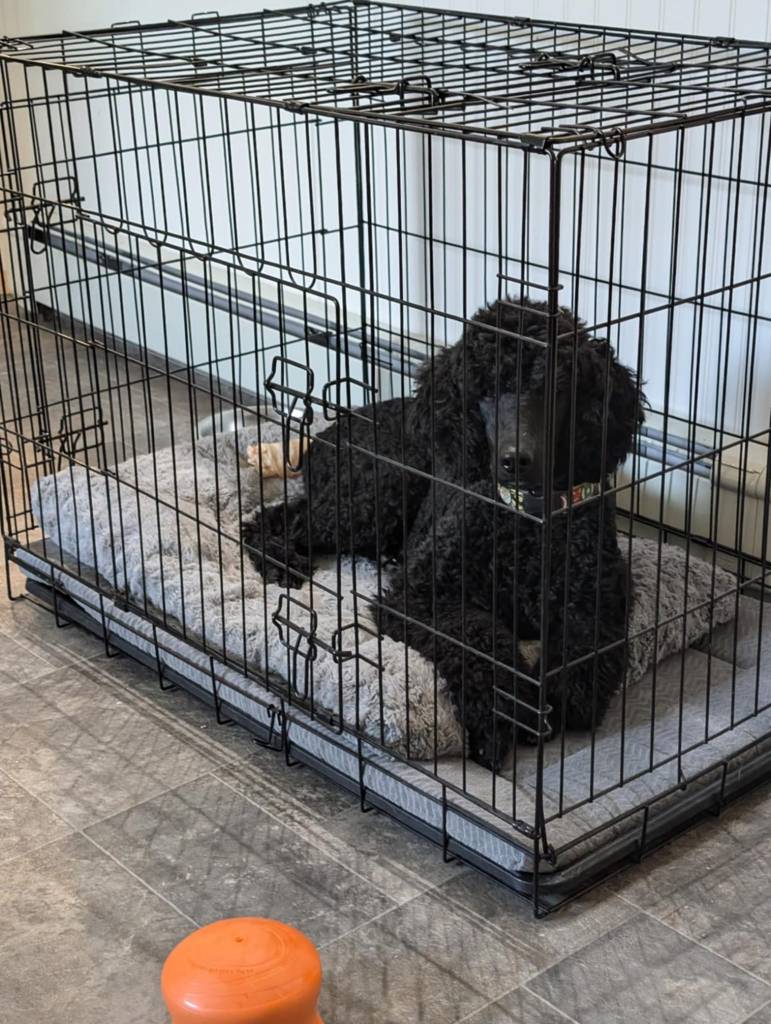
Not all dogs enjoy being part of holiday activities, especially the extra excitement and scariness of Halloween with it’s many spooky decorations and costumes. Even dogs who like to participate in some activities are likely to be happy for some quiet time in their own safe spot.
Before Halloween, bring your dog out to casually meet decorations around your neighborhood and at pet-friendly stores. This will help you assess and prepare them for the Big Night. (See Part 1 for tips!)
Set-up your dog’s crate or bed in a room away from the action, and give them a tasty chew or interactive toy that they enjoy. You can further increase the peace by adding the background sound of a fan, radio or TV tuned to a calm channel.
Check on your dog occasionally, removing any scary/weird components of your costume prior to entering the room.
Take them out a back door to pee in your yard, away from the sight of people in costumes.
Try to keep their dinner and bed-time on the usual schedule, and ideally don’t host a gathering that goes late into the evening.
If your dog is scared of people/parties, please don’t host a Halloween gathering. If you really must, consider boarding your dog so they can skip the stress of so many people invading their safe space.
If you will be keeping your uncomfortable dog at home and inviting visitors over, plan to keep keep two latched doors between your dog and visitors at all times – crate, room door, house door with party staying outside, etc. Put signs up and verbally alert visitors that this is an evening for leaving the dog alone.
If your dog is likely to try to bolt out of your house or to scale your fence, make sure they are wearing current ID tags, and perhaps invest in a GPS tracking collar in case they escape.
If your dog is a potential bite risk and you are inviting people to your home, consider keeping a basket muzzle on your dog to prevent a bite in the chance that management fails.
As a responsible owner, the safety and emotional comfort of both your dog and your visitors are top priority, even on Halloween.
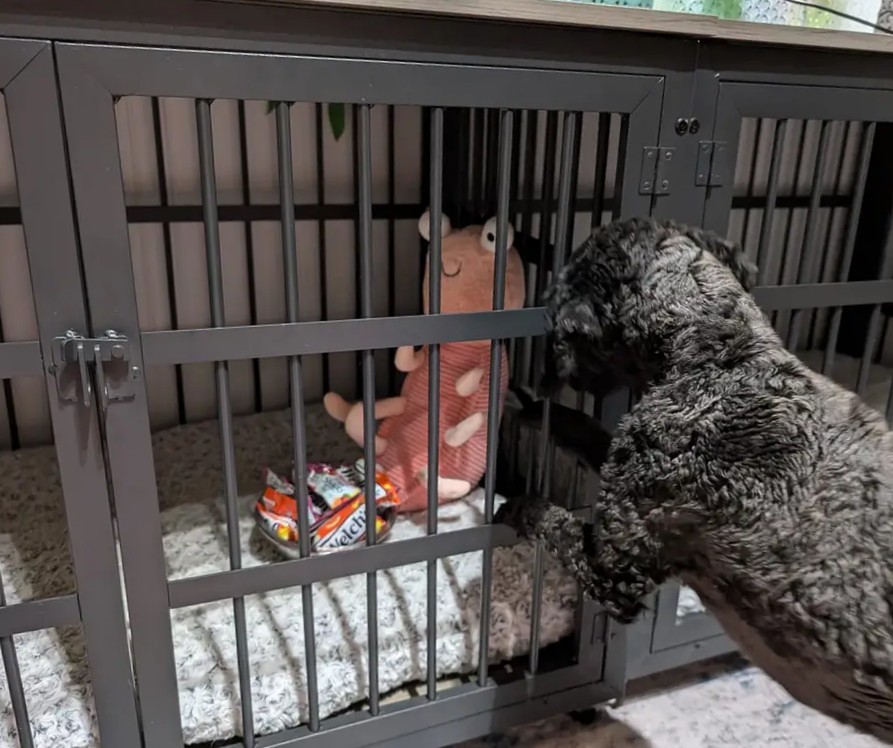
Have a happy, fun and safe Halloween!
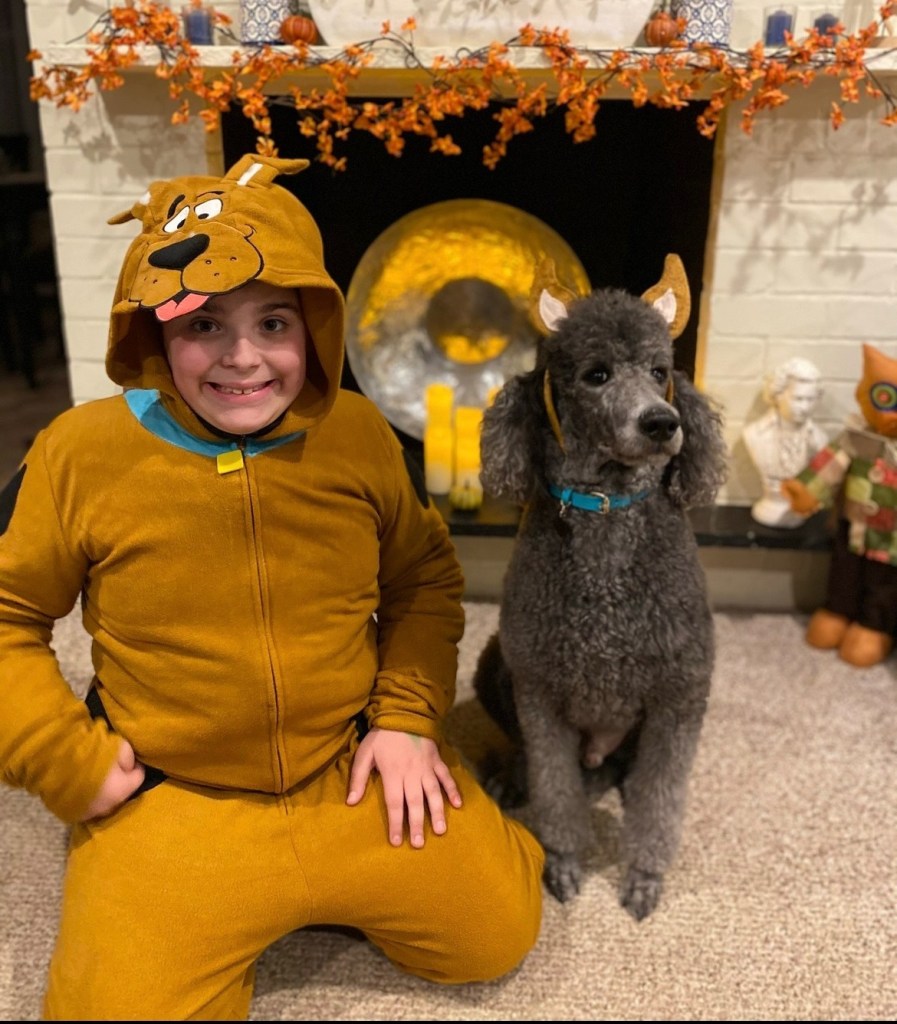
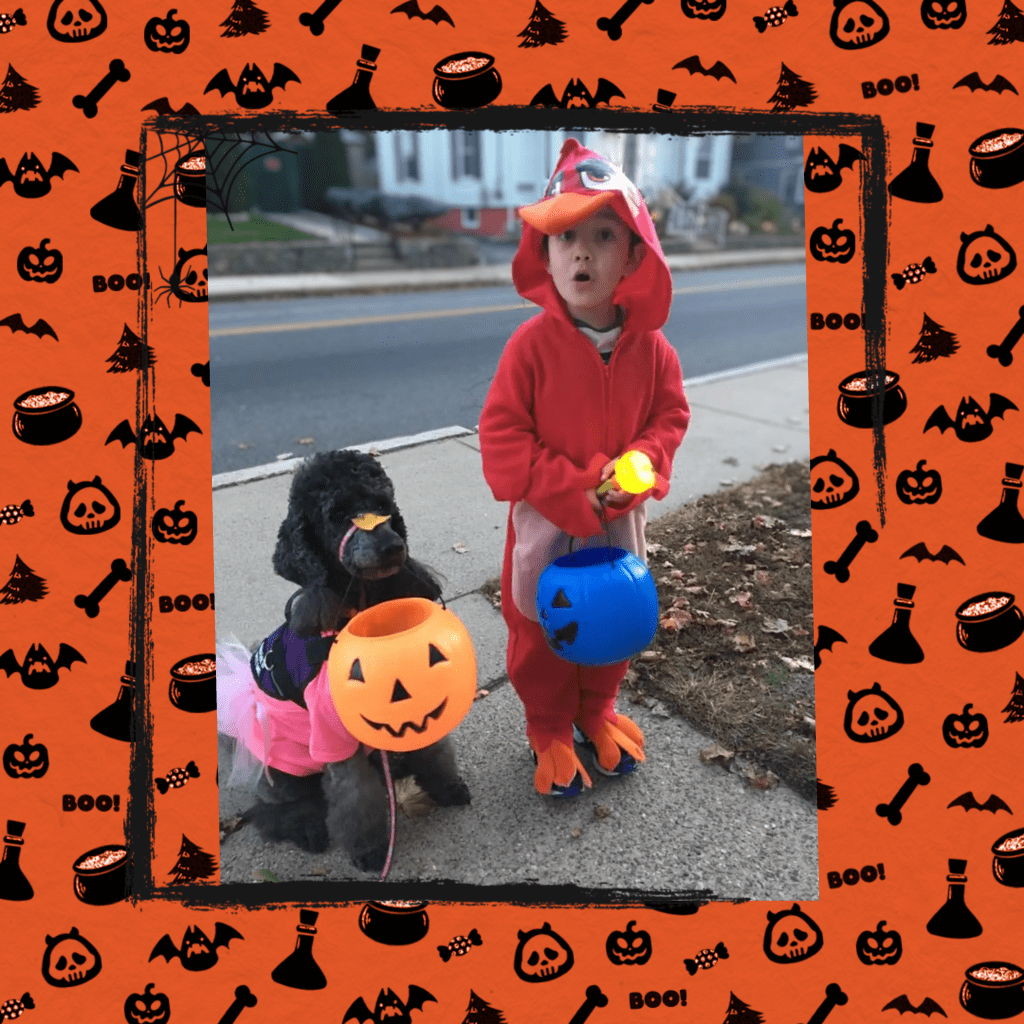
Thank you to Nicole for sharing our featured image of her son and Blossom as well as her candy image, and thank you to Aliska/Eager, Callie/Starlight, Kat/Maria’s Neptune, Mary/Quill and Marty, and Jill/Everest for their images.
For future articles, add your email address to our sign-up list (“Stay in Touch” at the bottom of the page). In the mean time, browse through our existing blog articles for other topics of interest.

 APAW - Poodle Pups for Working Roles
Leave a comment