

As a dog owner, Halloween is one of the most potentially dangerous holidays we celebrate. We need to support and protect our dogs for them to safely navigate this onslaught of spooky visitors, toxic candies, and many opportunities to accidentally run out the door.
Let’s look at the following dangers and how to prepare your dog for lower risk:
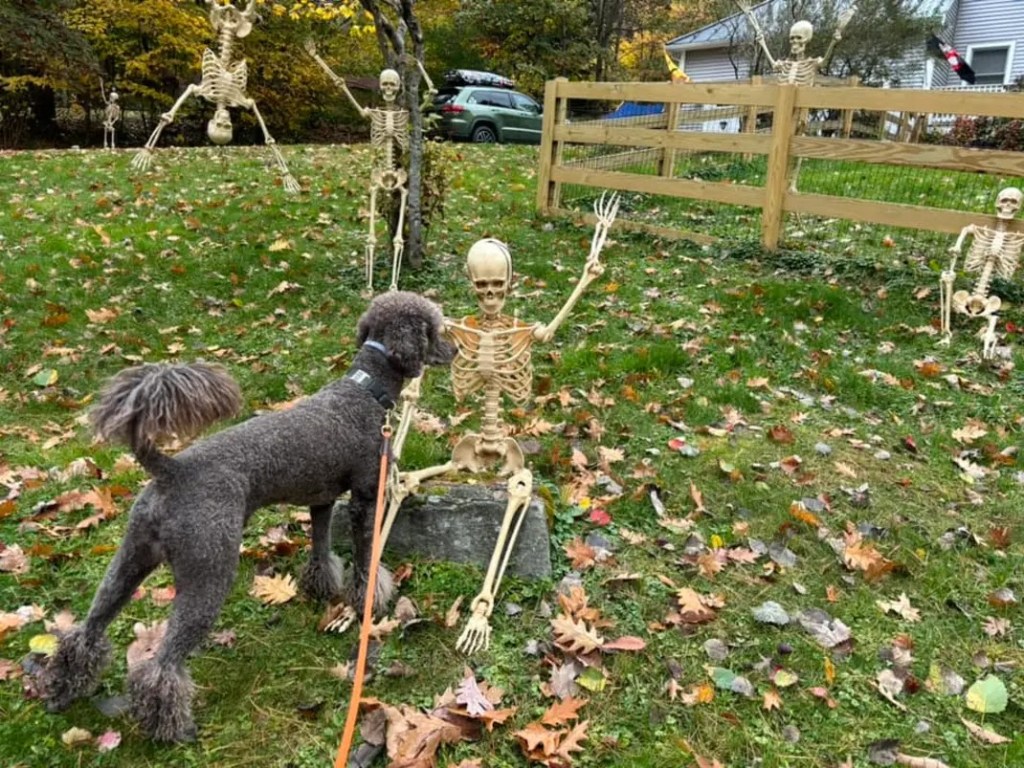
- Seeing Decorations and Trick-or-Treaters
- Answering the Door
- Avoiding Candy Ingestion
- Taking a Walk (in costume or just to potty)
- Management and Safety Precautions
Here in Part 1 we’ll focus on what you can practice to help your dog feel comfortable when the big day arrives. Part 2 is more of a safety overview for you to keep the evening smooth and the risks low.
Seeing Decorations and Trick-or-Treaters

To your dog it’s weird enough on Halloween that many groups of strangers are walking all over the neighborhood and coming to your door. Add to that many being dressed in eery to down-right terrifying costumes as monsters of one sort or another, and even a typically outgoing dog can easily get overwhelmed.
Start bringing extra treats on your walks now so that you can support your dog around new neighborhood decorations.
Don’t wait until Halloween day – start preparing your dog now to form positive associations with costumes and face masks too.
Throw a costume party!
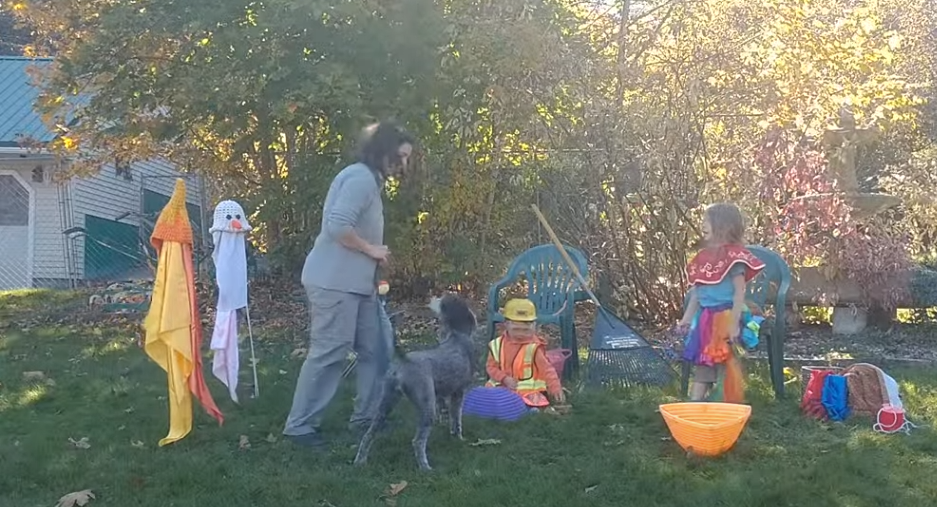
You don’t need fancy costumes; even just a few gentle experiences with people wearing a variety of hats, cloaks, and face coverings will go a long way. Introduce a few masks if you can, but you can use make-up/face paint, print a scary face and tape it on a box, etc. Introduce weird walking/movement styles, and also carrying a few types of items such as a bucket, pillowcase, broom, and cardboard “shield”. Also introduce a variety of vocal sounds, especially deep growling voices, cackling laughter, hissing and shrieks.
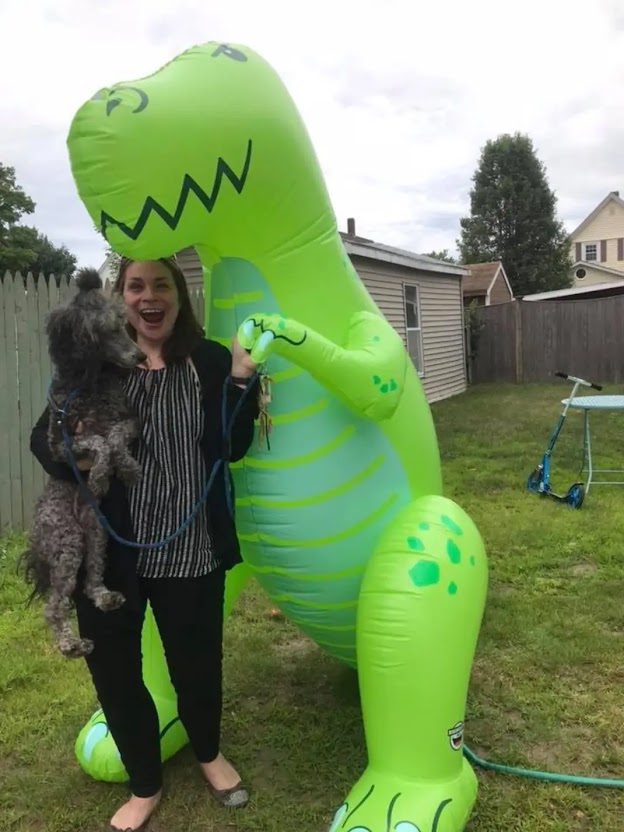
This can be done with family and friends (and yourself), and doesn’t necessarily need to involve strangers. As you make these introductions, separate the components to work on just one or two at a time. Use treats, toys/play and petting as your rewards, and start with your dog comfortably interacting with your helper/s in their un-costumed state. Allow your dog to watch people put on the costume components, with the positive interactions continuing throughout.
Have your hubby put on a hat and carry a box across the room, and when it’s clear that doesn’t bother your dog he can add a gruff voice while he continues to pet or toss a toy. Have your daughter drape a scarf or sheet over her face and dance around with a broom, perhaps ‘sweeping’ treats or a toy gently towards your dog. Stage a mini sword-fight with excited interactions between two people.
If at any point your dog is concerned, just slow down, back-up, remove the costume and remind them that it’s just their friend behind the mask. Do not force any interactions. It’s also completely fine to have all rewards come directly from you, encouraging your dog to just watch the ‘party’ from the sidelines. As your dog adds these positive experiences to their memory they will better respond to other similar scenarios with strangers in full costume.
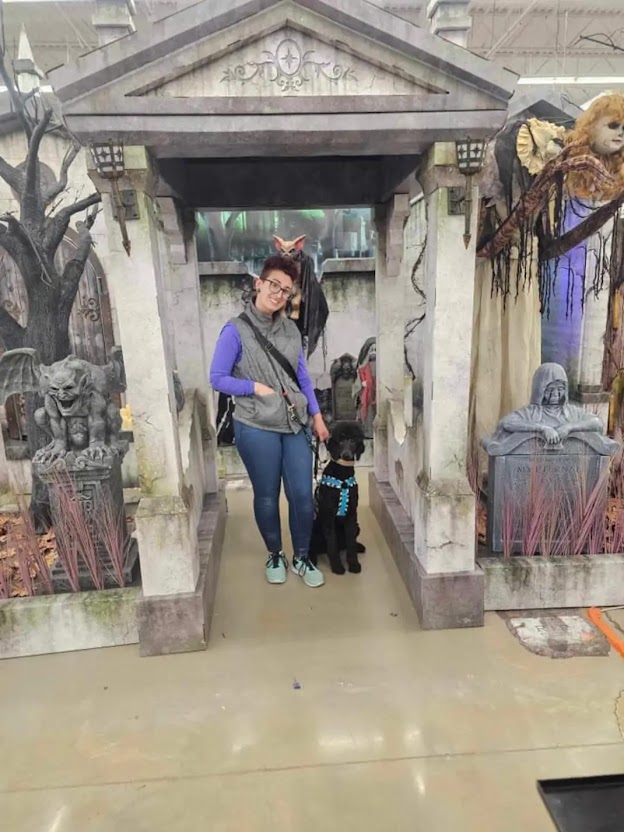
If your dog is fearful of people/strangers in general then on Halloween I recommend just keeping them safely in their crate in a back room with the radio on and a good chew treat. They don’t need to see/hear all the scary visitors.
Answering the Door
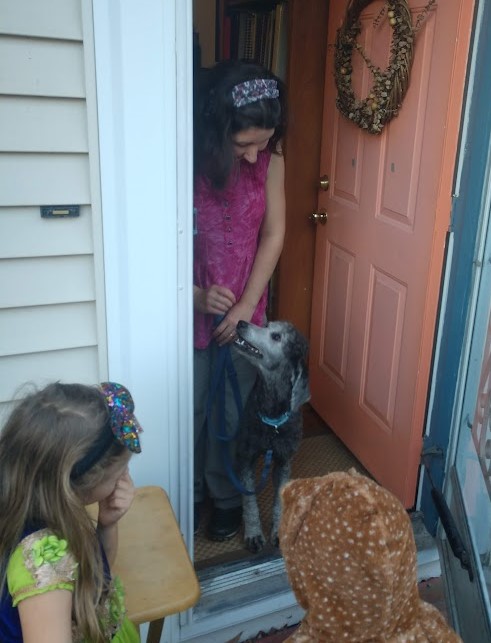
Practice rewarding your dog for quietly watching out the window as people walk down the street, and come up your walkway. If your dog gets excited for the doorbell, set-up your trick-or-treat station to avoid that trigger – leave the candy in a basket on the porch, or watch for visitors and step outside as they approach.
If you plan to have your dog greet people at the door with you:
- keep your dog on leash, held or secured, or
- use a gate to block the doorway
- keep your candy stash outside so you don’t need to step out if your dog is overly excited (or spooked) by a particular visitor
- keep an ID tag on your dog just in case they do get out
- keep a stash of delicious dog treats to give your dog for patiently watching, and for waiting as you open the door
- for everyone’s safety, it’s generally best to have a no-petting policy for trick-or-treaters – you don’t know how they will move/act that could trigger a bite even from a typically very friendly dog
- in place of petting, if you want an ‘interaction’ have your dog show off a quick trick like “wave” or “spin”
If your dog is likely to try to get out the door and/or to act aggressively or to spook, use multiple safety precautions or just avoid the risks and keep your dog secure in a different room with a treat to focus on.
Practice your preferred greeting scenario with at least a few visitors prior to Halloween.
Coming up in Part 2 we’ll be addressing candy dangers and what to do if your dog manages to eat some; tips for walking your dog during trick-or-treat hours; and an overview of management and safety precautions particularly for dogs who will not be comfortable with costumed visitors.
Add your email address to our sign-up list (“Stay in Touch” at the bottom of the page) to have Part 2 sent to you when it’s published in a few days. In the mean time, browse through our existing blog articles for other topics of interest.
Thank you to Natasha for sharing our featured image of her boys Lestat and Stark, and thank you to Emma/Sammy, Callie/Starlight, Courtney/Diamond and Clara/Lorca for their images.

 APAW - Poodle Pups for Working Roles
Leave a comment