

You are getting a puppy (or already have one) and you want to raise them for a specific role – to be a service dog, or a therapy dog, or a sports/performance companion… or even ‘just’ a well-rounded companion who you can bring on pet-friendly outings.
Good news – raising your puppy doesn’t need to be overly challenging, and you don’t need to worry about career-specific skills from the very beginning!
**Note, a puppy intended for a specific career should be carefully selected preferably with professional assistance as not every puppy is suitable for every role. This article is geared towards how to raise the pup after a good prospect has already been selected.**
Every role you might have in mind almost certainly has the same foundations that your puppy will need to learn, and they can all be done within the realm of raising a wonderful pet.
Key characteristics of any working dog:
- They have reliable manners and basic obedience
- They are generally calm and comfortable in a wide variety of environments
- They are accepting of brief greetings by strangers
- They are non-reactive to stimuli including other dogs, people, equipment, etc
- (Reactivity is when a dog barks, growls, lunges, wants to play – they have a ‘reaction’ instead of being able to ignore the distraction)
- And they can remain responsive to their handler’s cues despite distractions
This might seem over-simplified, but honestly, if your dog can meet this criteria then they can likely learn the specific skills for your chosen career and be ready to work in 3-6 months or so. When you hear that it takes 1.5-3 years to teach a dog for a career, that time-frame mostly consists of teaching these key characteristics and letting the dog mature physically and developmentally, not the career-specific skills.
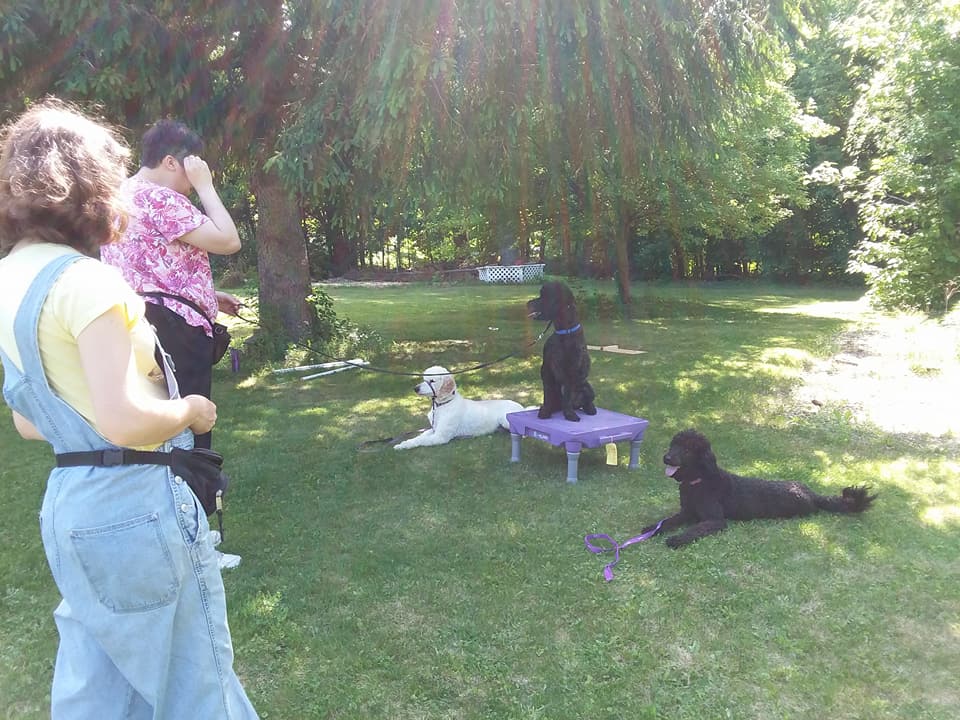
So how do you teach these baseline skills to your puppy? Any (every!) dog training class works towards these skills, because they are good, normal life skills that all dogs including pets should understand.
3-6 months old: Puppy Kindergarten or STAR Puppy classes are formulated for introducing these skills at puppy speed (brief focus and then moving on to the next topic), and usually incorporate some social aspects of ‘engage/disengage’ where the pup is given permission to interact/greet/sniff and then is cued and reinforced for returning their focus to their handler. Trainers introduce concepts in class and give you ideas for how to expand on this practice in your daily life. Skills often include sitting and lying down, walking on a loose leash, a nose-target, and early stages of wait/stay and leaving a distraction. Some classes include a lot more, such as climbing on obstacles, going through tunnels, balancing on wobbly surfaces, paw-targets, etc.
6-12 months old: Basic or Intermediate Obedience classes are designed for dogs with more potential self-control than the early puppy stage, but still learning to perform basic cues and focus on the handler in the proximity of distractions. Skills often include the initial skills of puppy kindergarten but building duration and distance to around the end of the leash, and adding more precision to turn loose leash walking into heeling.
12+ months old: Advanced Pet Obedience classes and ‘On The Road’ classes help increase criteria such as longer stays and further distances, typically adding in some off-leash training and increased precision as well as continually more challenging distractions.
Canine Good Citizen classes: CGC classes focus specifically on the key skills outlined above, generally in a training setting. This is an excellent next step, and depending on your dog’s age and training background you can often jump into this class without prior classes if the instructor feels your dog is ready. At the end of a CGC class there is usually an evaluation of the skills taught, and any dog who can demonstrate each skill will earn the title of Canine Good Citizen. An important note – while CGC classes do cover all of these skills, the class itself won’t teach your dog to reliably meet this level of behavior in other environments… that’s your job as handler, to practice the skills you learn in class and to teach your dog that the same rules apply everywhere you go.

CGC Advanced and Urban classes: These are the classes that will help you build and refine the skills needed to meet the key characteristics your dog will need for any working role or as a great companion when out and about. These classes add yet more advanced real-life skills, added distance, duration and distractions… and the trainer typically takes the class out to public locations for your sessions – walking a downtown sidewalk, heading to a pet store, an outdoor pet-friendly cafe, a pet-friendly hardware store, etc. Like the CGC class, the Advanced and Urban classes also end with an evaluation and opportunity to earn the respective title.

Ideas for frequently pet-friendly training locations:
- Pet stores (Petco, Petsmart…)
- Sporting and feed stores (Tractor Supply Co, Bass Pro Shops, Cabela’s…)
- Hardware stores (Lowe’s, Home Depot, Harbor Freight…)
- Craft stores (Michael’s, JoAnn Fabrics, Hobby Lobby…)
- Bookstores (Barnes & Noble…)
- Home goods stores (TJ Maxx, Marshalls, Macy’s…)
- Clothing stores (Old Navy, GAP, Nordstrom…)
- Many nursing homes, if you are visiting a resident…
- Some malls, in the main hallways…
- Some trains and buses…
- Your bank…
- Outdoor cafes…
Check with your local store first as not all locations welcome pets, but some of these stores have a chain-wide pet-friendly policy.
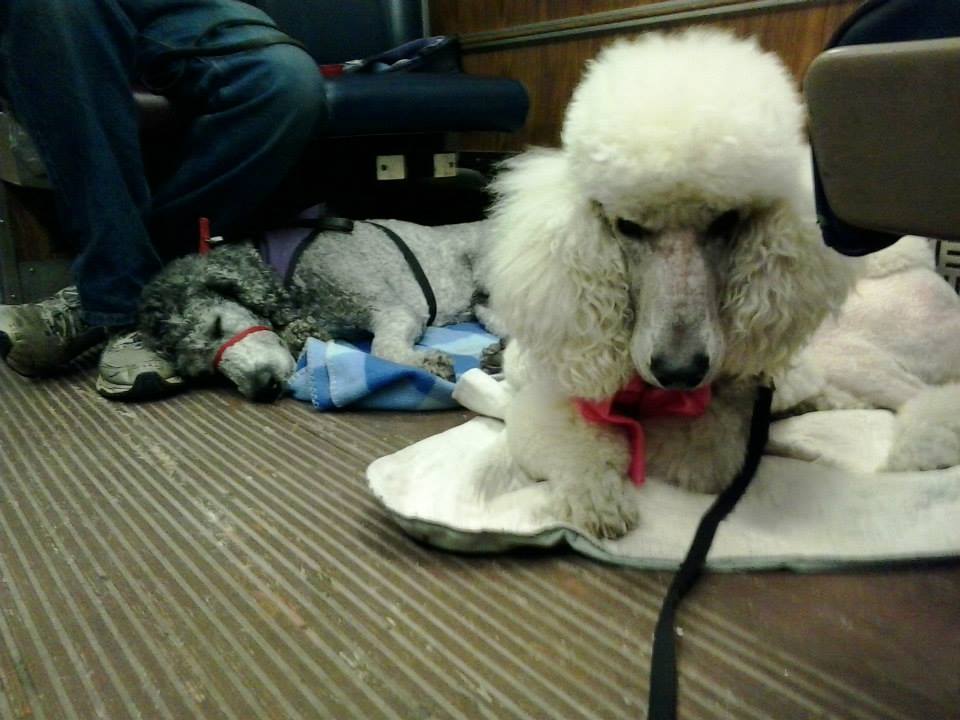
As you can see, there are a huge number of fabulous training opportunities for practicing with your dog in public without any special permission or career-track needed. A service dog pup does not need a vest or to be publicly recognized as a service dog in-training until they are already advanced enough to meet full-status service dog criteria – the primary additional experiences official Public Access grants is dining in at restaurants (which is no challenge if the dog can rest under the dinner table at home and can work in other public settings), and ignoring the food you pass at the grocery store (again, no significant challenge if the dog can work in other public settings).
This is not to say there aren’t career-specific skills that you can start teaching your pup from the start – you can certainly start teaching skills as fun and reinforcing activities at an early age. But it’s not necessary to start young for the dog to be just as successful once mature. And starting young can unintentionally put too much pressure on a puppy (or handler) and result in burn-out before they even get started in their career… In a different post I’ll share tips regarding skills that are helpful to start teaching at younger ages for different careers, and how to go about it to reduce the chances of burning your puppy out.
So focus on your foundations, build your bond and communication, and raise your dog to be a fantastic companion you can enjoy bringing anywhere (pet-friendly).


 APAW - Poodle Pups for Working Roles
Leave a comment